

How to use text evidence in writing gets easier when students practice the smaller skills first, and this post shows how to build that practice so it actually transfers into stronger paragraphs and essays.

One thing I have noticed with my students is that knowing how to find text evidence does not always mean they know how to use it in their writing.
Using text evidence in writing is often harder for students than simply finding the right evidence.
They might find the perfect sentence in the passage, but once they start writing, they copy it without introducing it, forget the quotation marks, or are unsure how to paraphrase it in their own words.
And when I see the same mistake happening in essay after essay, I have learned that assigning another essay is not always the answer.
Sometimes I need to pull out that one skill and give students time to practice it on its own.
If students are still struggling with the difference between quoting and paraphrasing, I break that down more in my post on teaching students how to quote and paraphrase using text evidence.
Table of Contents
Find Where the Writing Is Breaking Down
Before I give students more practice, I first try to figure out exactly where they are getting stuck.
Sometimes they cannot find the evidence.
Other times, they can identify the right sentence in the text but do not know how to work it into their writing.
They may copy the sentence exactly without introducing it, forget quotation marks and commas, or confuse paraphrasing with summarizing.
The problem is not always the entire essay.
Sometimes it is one small writing move that needs more practice.
Stop Practicing Everything at Once
Essay writing asks students to do a lot at the same time.
They have to understand the prompt, develop an idea, organize their response, find evidence, introduce it, explain it, and make sure everything fits together.
If one part of that process is weak, giving students another full essay does not always fix it.
Instead, I like to practice one skill at a time.
For text evidence, that might mean practicing how to introduce a quote, how to paraphrase a sentence, or how to explain the evidence after it is included.
Once students are more comfortable with that one skill, I can put it back into paragraph or essay writing.
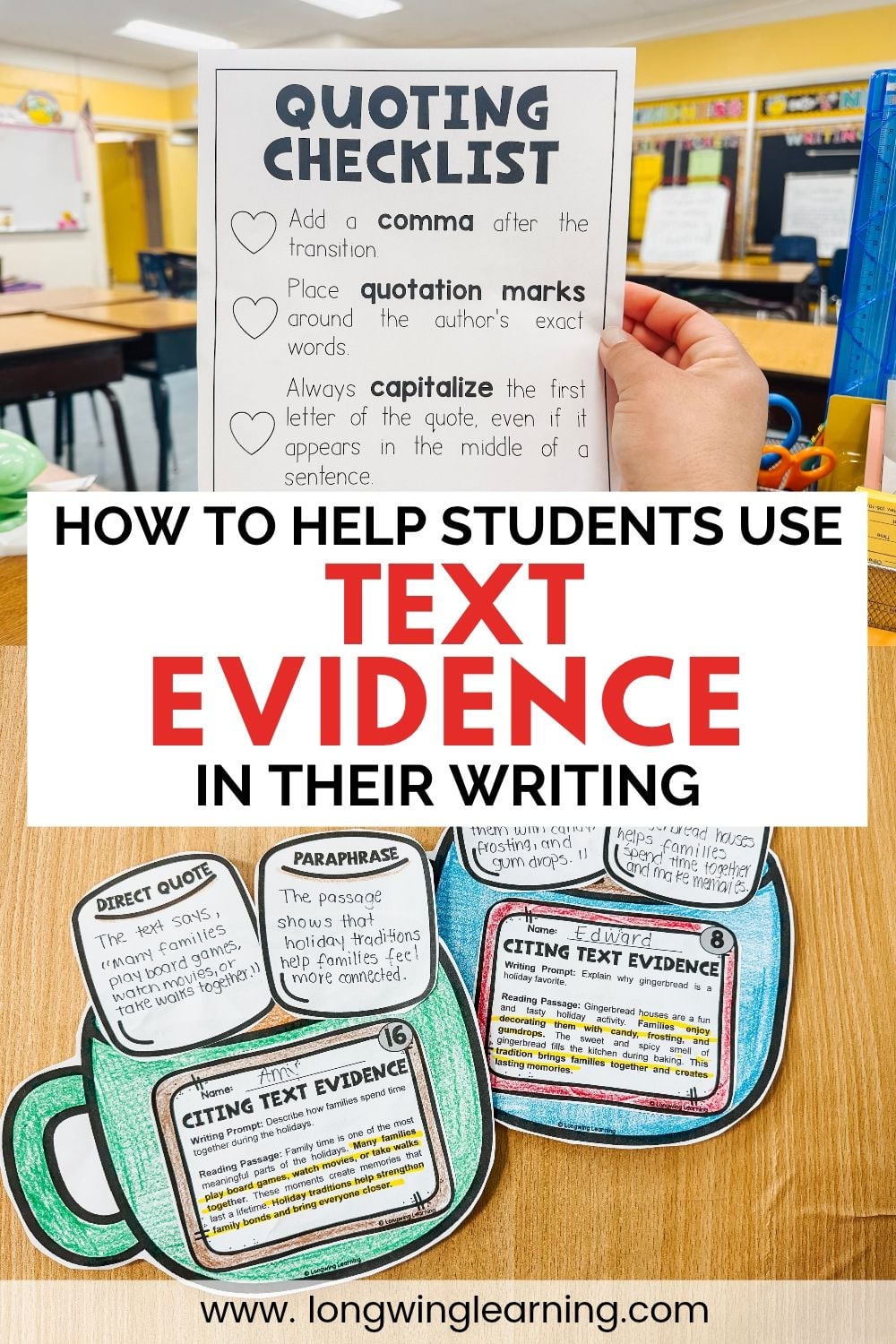
Take Time Practicing Quoting and Paraphrasing
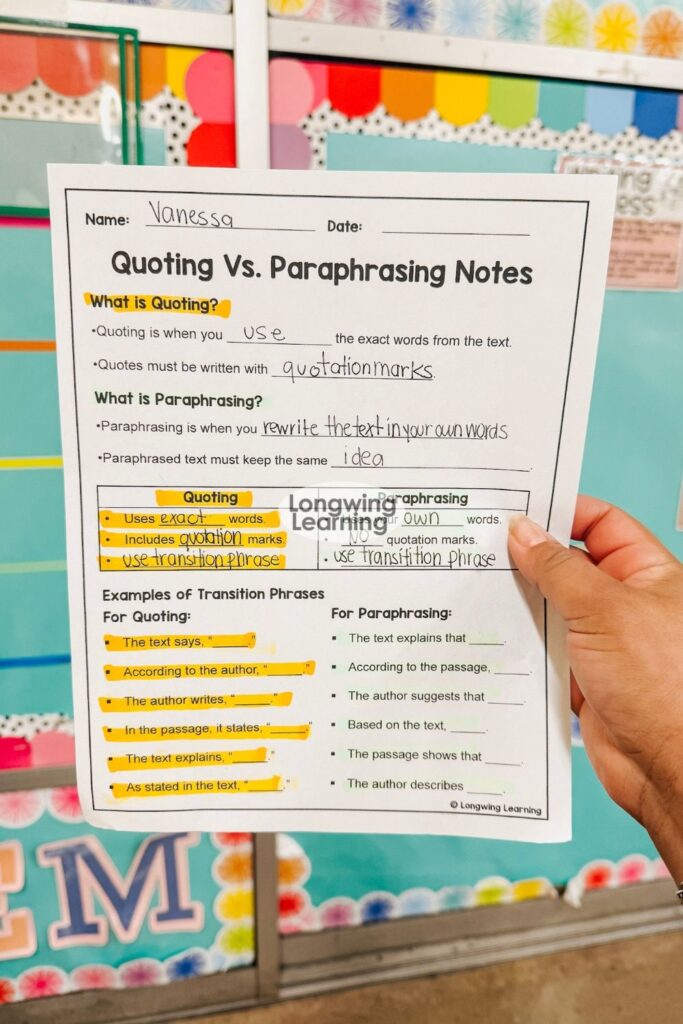
Quoting and paraphrasing are good skills to practice separately because students often know what evidence they want to use but are not sure how to write it correctly.
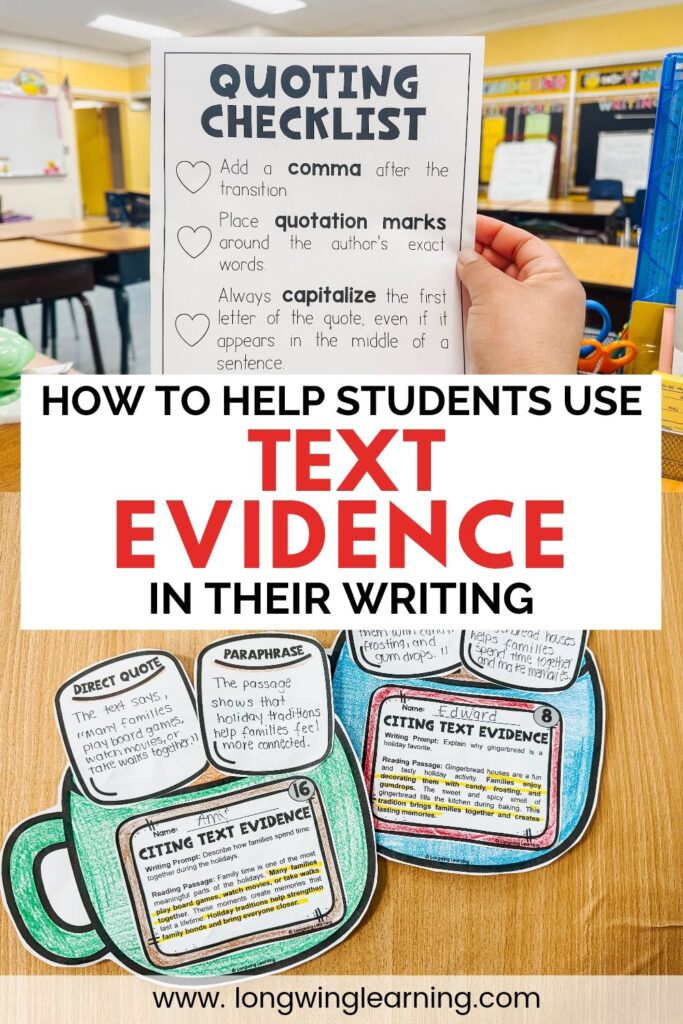
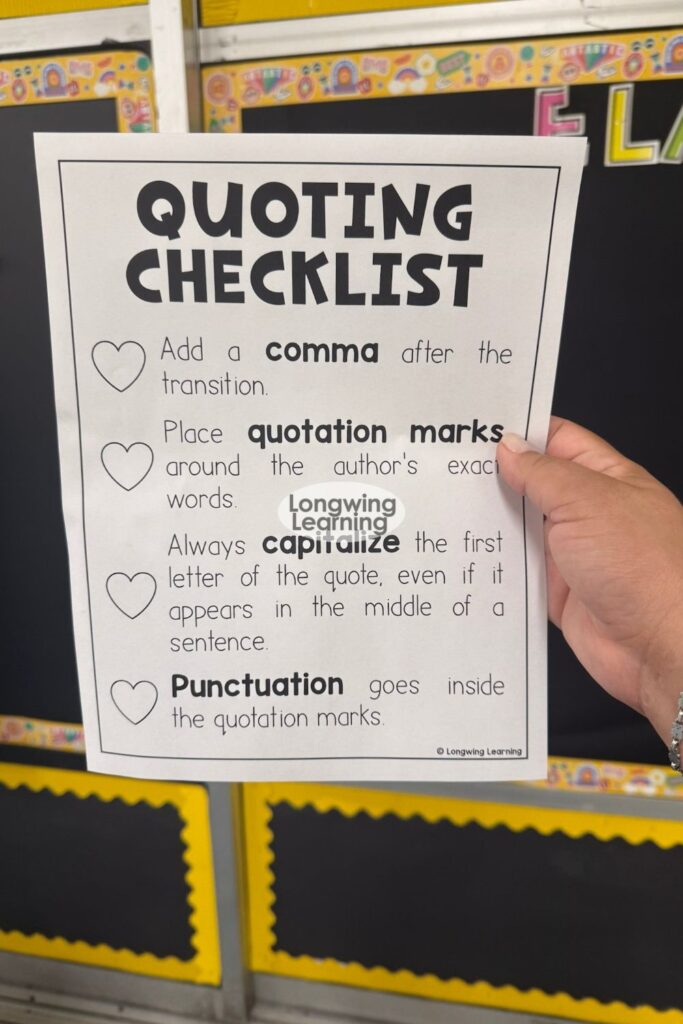
When we practice quoting, I want students to notice the small details.
There is a transition or lead-in.
There is a comma.
There are quotation marks.
The quote fits into a complete sentence.
When we practice paraphrasing, I want students to focus on keeping the meaning while changing the wording.
That is different from copying the original sentence and changing one or two words.
It is also different from summarizing an entire passage.
The more students practice these skills, the less they have to think about them later when they are writing a longer response.
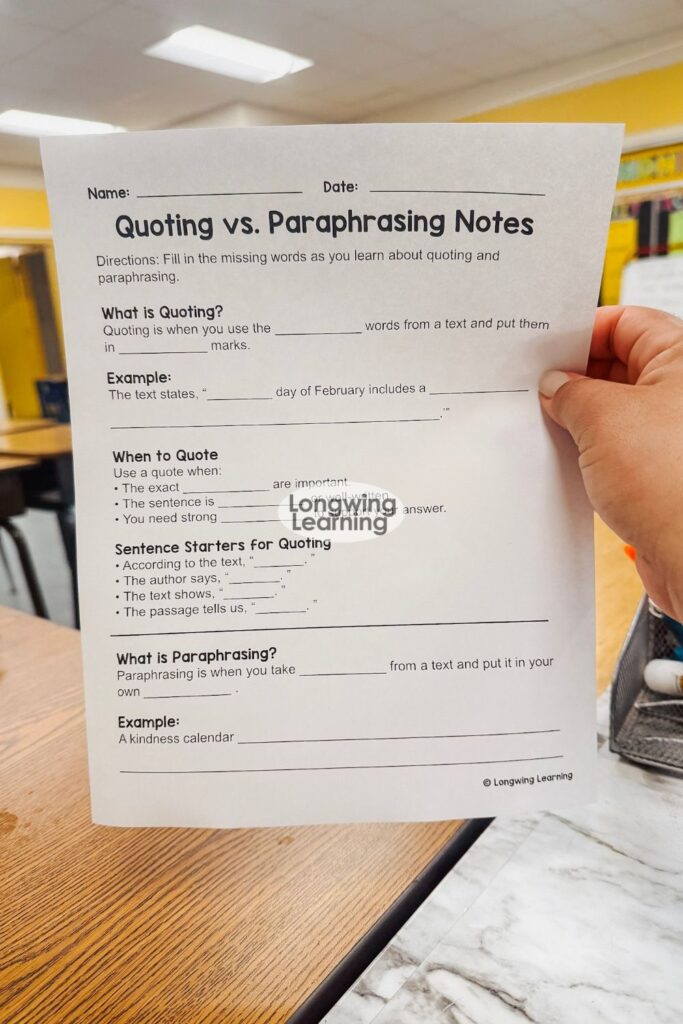
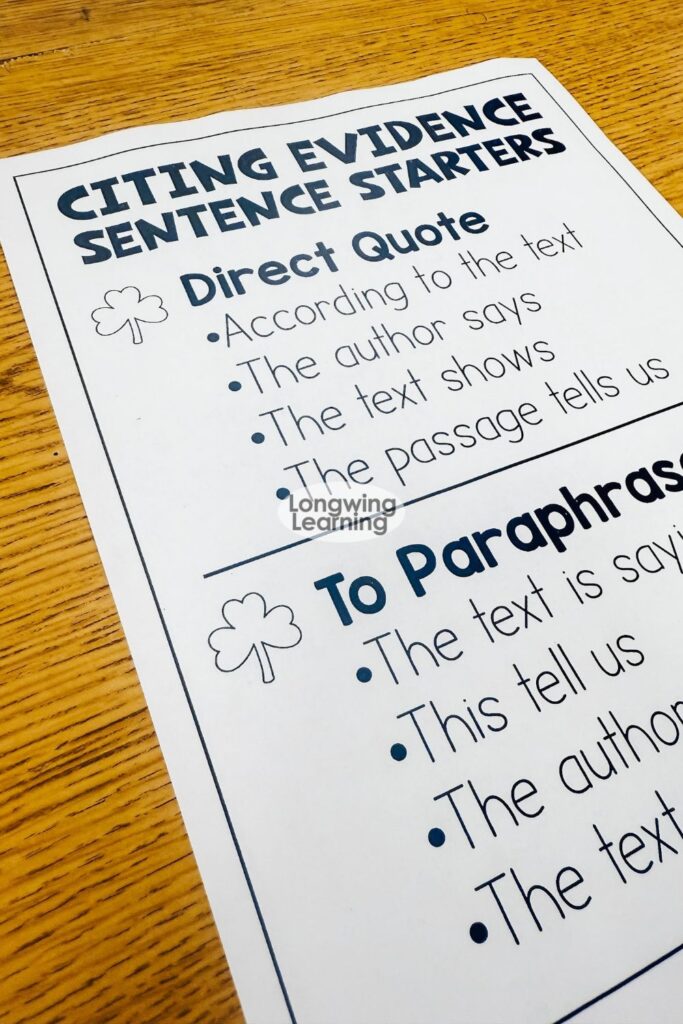
Use Short Passages for Repeated Practice
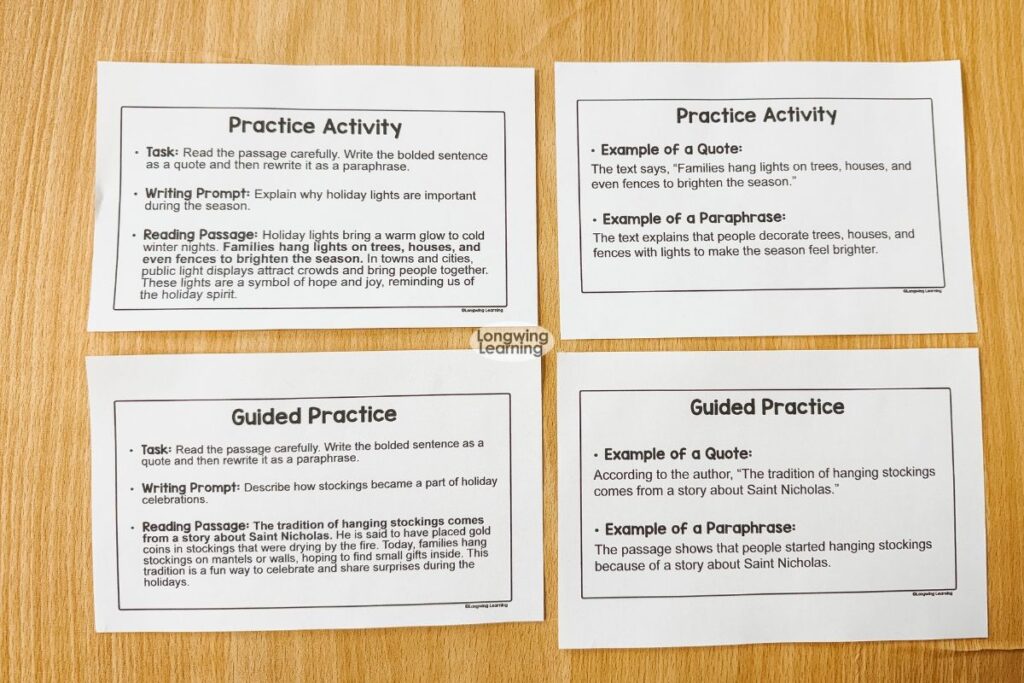
I like using short passages because students can practice the same skill several times without the activity turning into another full writing assignment.
I usually model one example together first.
We identify the evidence, talk through how to introduce it, and practice either quoting or paraphrasing it.
After that, students can work independently.
I also like giving students different passages.
When everyone has the exact same passage, it can quickly become one shared classroom answer.
One student says the quote, another student repeats it, and soon everyone has written the same thing.
Different passages give students more opportunities to think through the process on their own.
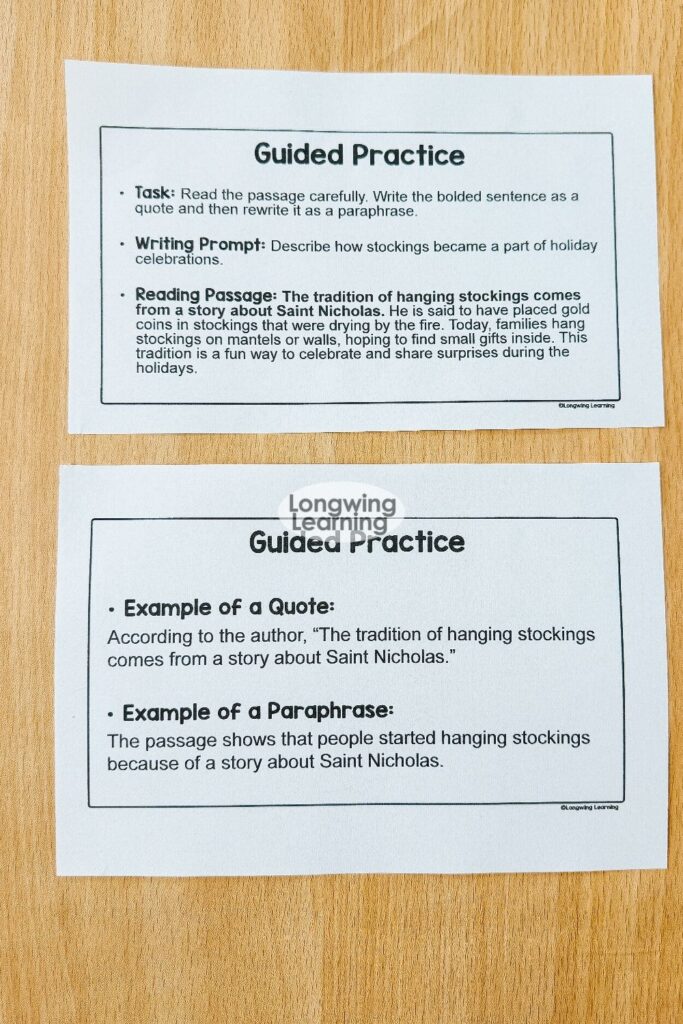
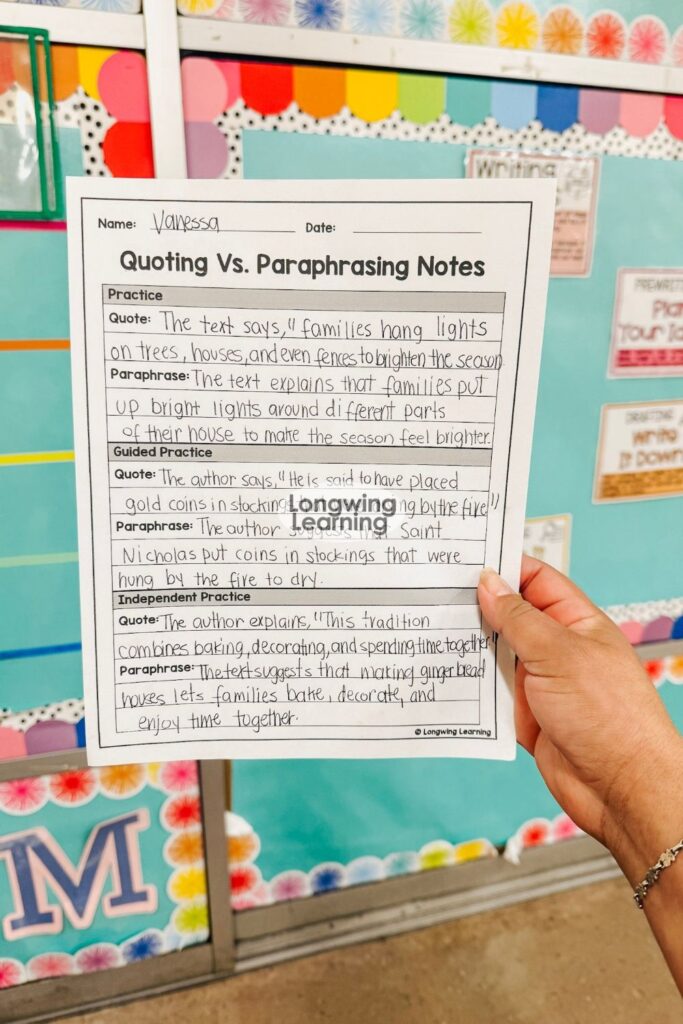
Practice the Skill More Than Once
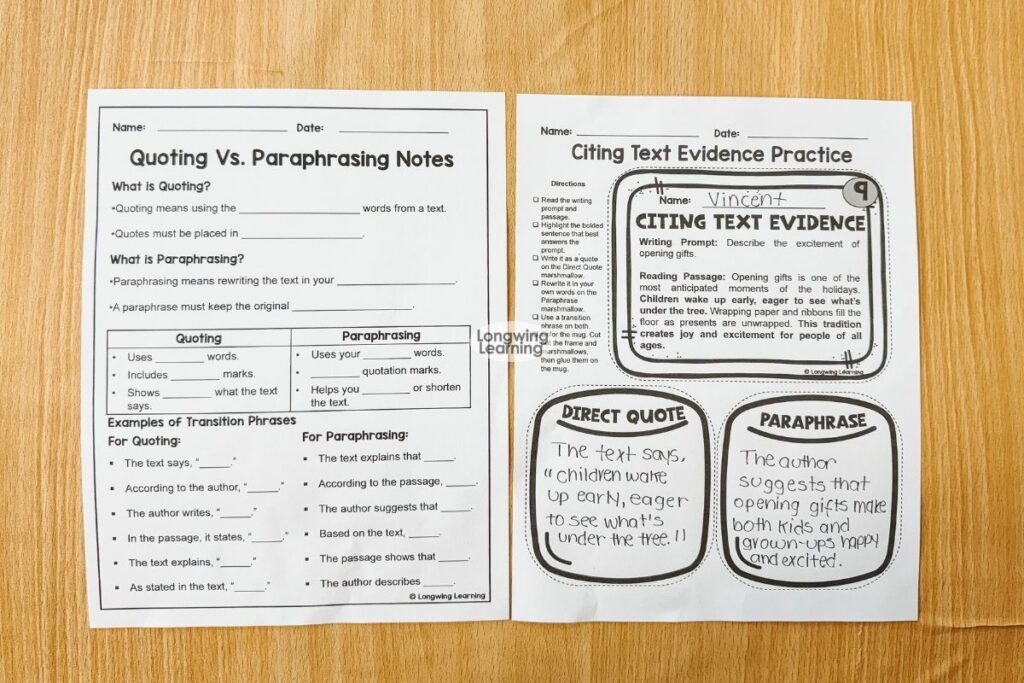
One practice example is usually not enough.
I want students to see quoting and paraphrasing several times.
They might complete one passage and then move on to another.
The goal is not necessarily to turn every example into a finished craft or project.
Sometimes I have students complete several and then choose one they feel they did especially well.
That way, the finished piece is only one part of the activity.
The real learning comes from the repeated practice before it.
Keep Practicing Text Evidence in Writing Throughout the Year
Using text evidence is not a skill I teach once and then move on from.
Students need to use it again when we write paragraphs, text-dependent responses, and essays.
One way I keep the practice going is by changing the theme while keeping the skill the same.
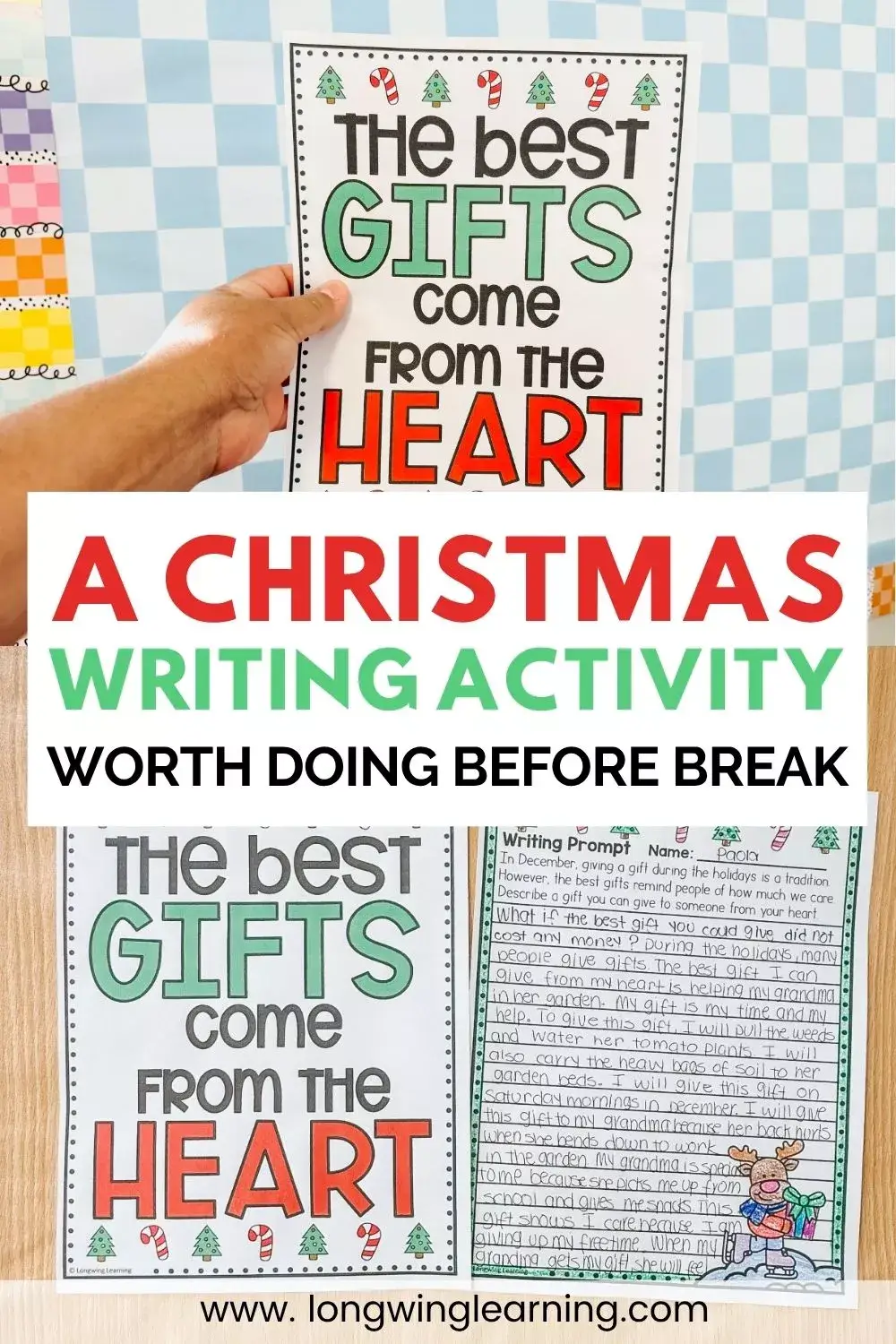
In December, I use my winter quoting and paraphrasing text evidence activity with short seasonal passages so students can continue practicing the skill without it feeling like the exact same lesson again.
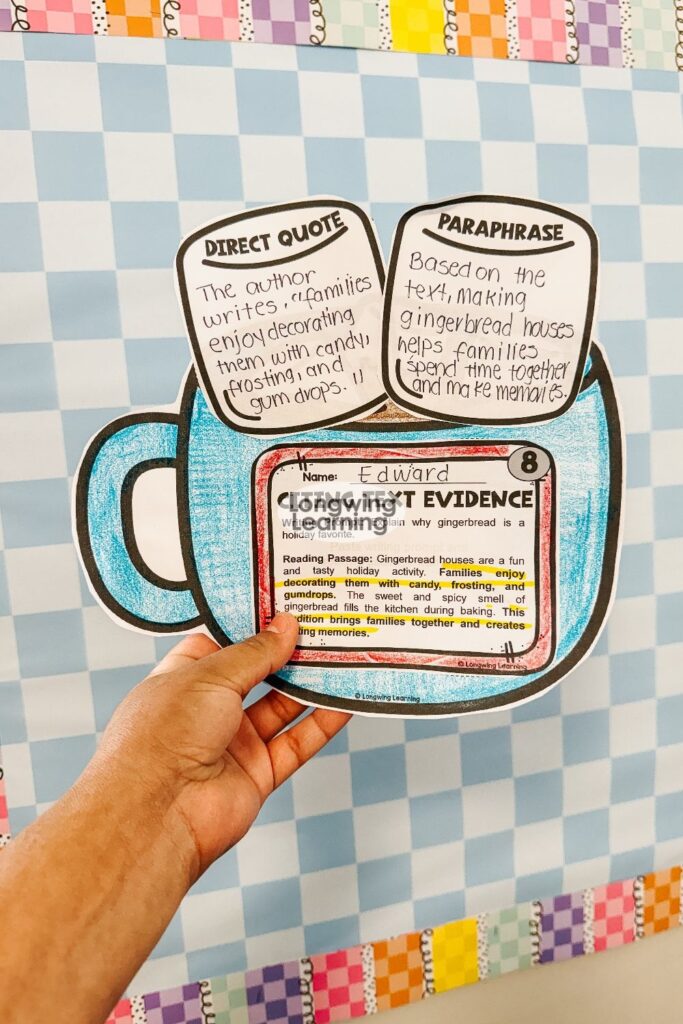
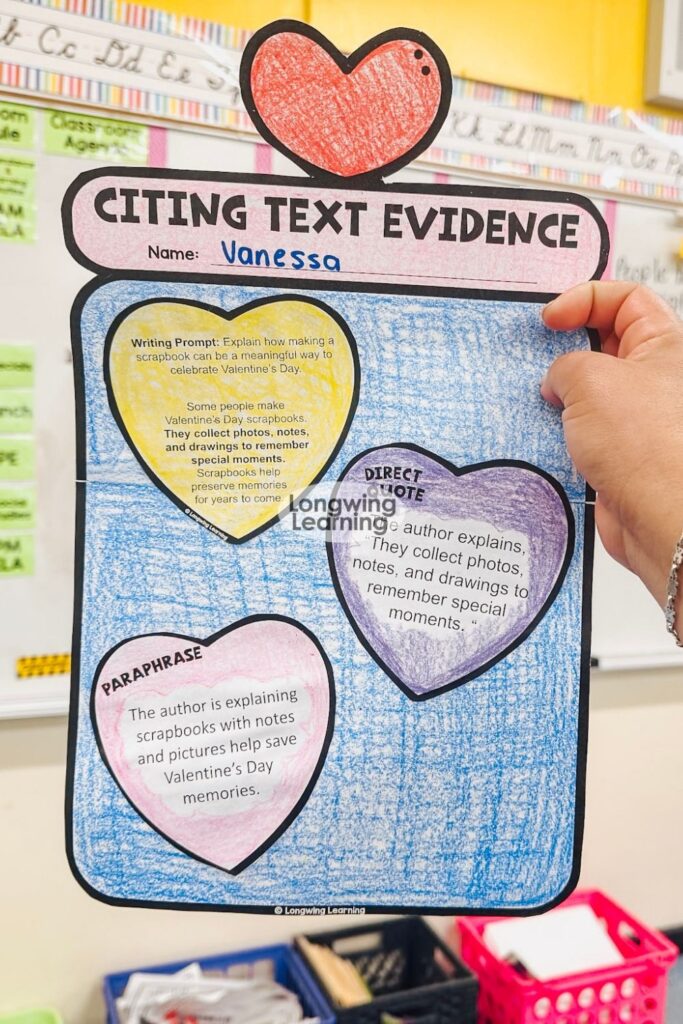
In February, I revisit the same skill with my Valentine’s Day quoting and paraphrasing text evidence activity.
The theme changes, but students are still practicing how to pull evidence from a short text and work it into their own writing.
In March, I bring the skill back again with my St. Patrick’s Day quoting and paraphrasing text evidence activity, giving students another chance to practice the same writing skill with a new seasonal theme.
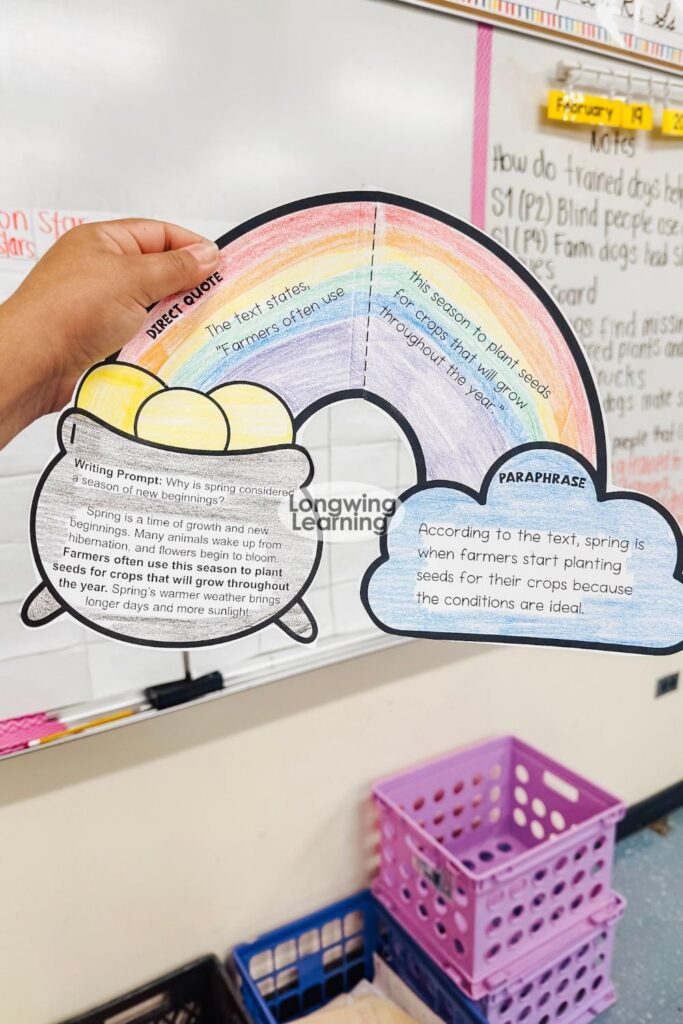
The theme changes, but the skill stays the same.
Students are still practicing how to introduce evidence, use quotation marks and commas correctly, paraphrase information, and work evidence into their own writing.
This repeated practice helps the skill feel more familiar before students have to use everything together in a longer response.
Use Seasonal Practice Without Making It Filler
I like seasonal activities, but I still want them connected to something students actually need to practice.
That is what makes this type of activity useful.
Students might be working with a winter, Valentine’s Day, or spring theme, but they are still practicing a writing skill that will show up again in longer responses.
The seasonal part makes the practice feel different.
The skill stays the same.
This also makes the activities easy to fit into months when the schedule gets busy.
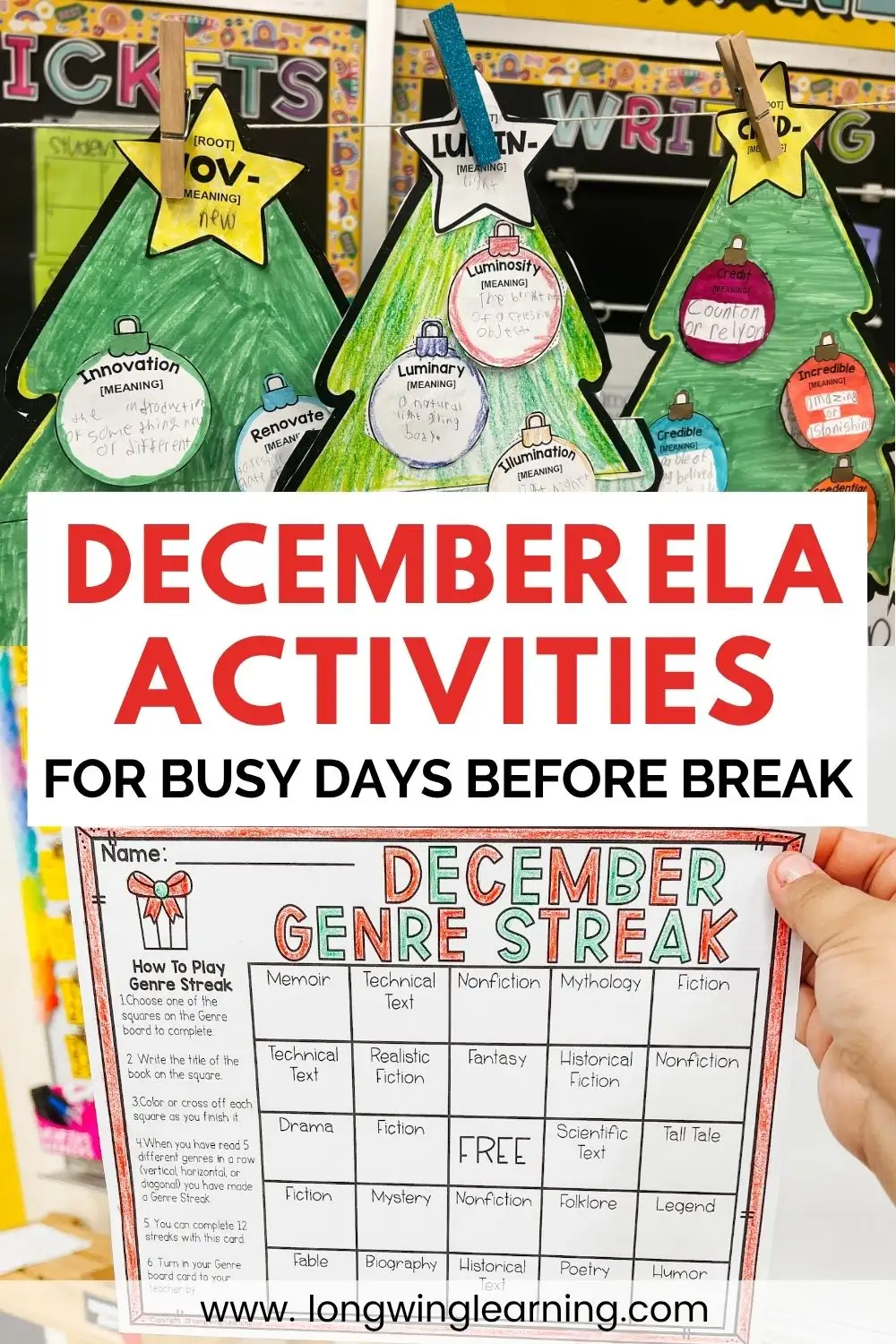
December is a good example.
Between testing, practices, holiday events, and schedule changes, I do not always have one long uninterrupted block of time.
Short passages work well because students can complete one, stop, and come back later.
They are still getting meaningful writing practice without needing to finish an entire essay in one sitting.
Put the Skill Back Into a Paragraph
Once students are comfortable using evidence, I start putting the skill back into a larger piece of writing.
Instead of only writing the evidence sentence, students can write a complete paragraph.
That might include:
- a topic sentence
- text evidence
- elaboration
- a closing sentence
This is where I can see whether the isolated practice is transferring.
Students who have practiced introducing quotations several times are more likely to remember to do it inside the paragraph.
Students who have practiced paraphrasing short pieces of information have an easier time using their own words.
Because we already worked on those pieces separately, I do not have to stop and reteach every part of the paragraph at the same time.
Add a Challenge for Students Who Are Ready
Not every student needs the same amount of practice.
Some students catch on quickly.
When that happens, I extend the activity instead of giving them more of the exact same thing.
One option is to have students write a full paragraph using only a direct quote as their evidence.
Then they can write another paragraph using only paraphrased evidence.
For an additional challenge, they can write a paragraph that includes both.
That gives students practice making choices about how they want to use information from the text.
It also helps them see that quoting and paraphrasing are tools they can choose from, not two completely separate assignments.
Do Not Forget the Elaboration
Even when students use evidence correctly, the paragraph is not finished.
This is another area where students often need support.
They add the quote.
Then they stop.
I remind students that the evidence shows what the text says, but the elaboration explains why that evidence matters.
After adding text evidence, I want them to ask:
What does this show?
How does this support my answer?
Why is this evidence important?
Once students are comfortable using evidence, it becomes much easier to shift the focus to elaboration.
They are no longer using all of their energy trying to figure out how to insert the evidence, so they can focus more on explaining their thinking.
I share more ideas for that next step in my post on teaching elaboration and adding detail in writing.
For students who need even more focused practice, I also use my Show, Don’t Tell elaboration practice resource to help them build stronger explanations and add more detail to their writing.
Look for Transfer, Not Just a Finished Activity
The goal is not simply for students to complete a craft or finish a worksheet.
I want to see whether they can take that same skill and use it later in a paragraph or essay.
That is why I like practicing one skill at a time to build proficiency.
It gives students time to focus on one writing move until it feels more familiar.
Then, when we return to a longer response, I can see whether that practice transfers.
Sometimes students do not need another full essay.
They need more time practicing the exact part that is getting in their way.
And once that piece becomes stronger, the larger writing task becomes much easier to manage.
Want to come back to these ideas when you’re planning your next text evidence lesson?
Save this post to your Pinterest board so it’s easy to find.