

Fall Greek and Latin roots activity for 4th 5th grade does not have to be complicated to be effective, sometimes simple repeated exposure is exactly what students need.
In the fall is when I start introducing many of the roots my students will need to know before the end of fifth grade.
Some of my students come in already knowing a few roots or at least recognizing them, while others are seeing them for the first time.
I do not expect mastery right away. At this point, my goal is exposure.
I work with a set of 48 roots, and I know right away that students will not learn all of them at once.
Some will stick quickly, while others take time.
What matters most is that students continue to see them again and again. Even if I have not directly taught a root yet, I still let students interact with it.
I have them look at it, try to figure it out, and start building familiarity.
Over time, that repeated exposure is what helps everything come together.
Table of Contents
What Students Actually Need When Learning Roots
When it comes to a fall Greek and Latin roots activity for 4th 5th grade, I have realized that students do not need more long lessons or complicated explanations for every root.
What they actually need is consistent practice that helps them connect meaning to real words.
In my classroom, that means giving students opportunities to see the root more than once, connect it to words they recognize, think about what the root means, and use that meaning in a sentence.
I have seen that when students are given multiple chances to interact with the same root in simple ways, they start to remember it naturally.
It does not feel forced, and it does not overwhelm them.
What This Looks Like in My Classroom
One of the ways I build in a fall Greek and Latin roots activity for 4th 5th grade is through simple seasonal practice that does not feel like extra work.
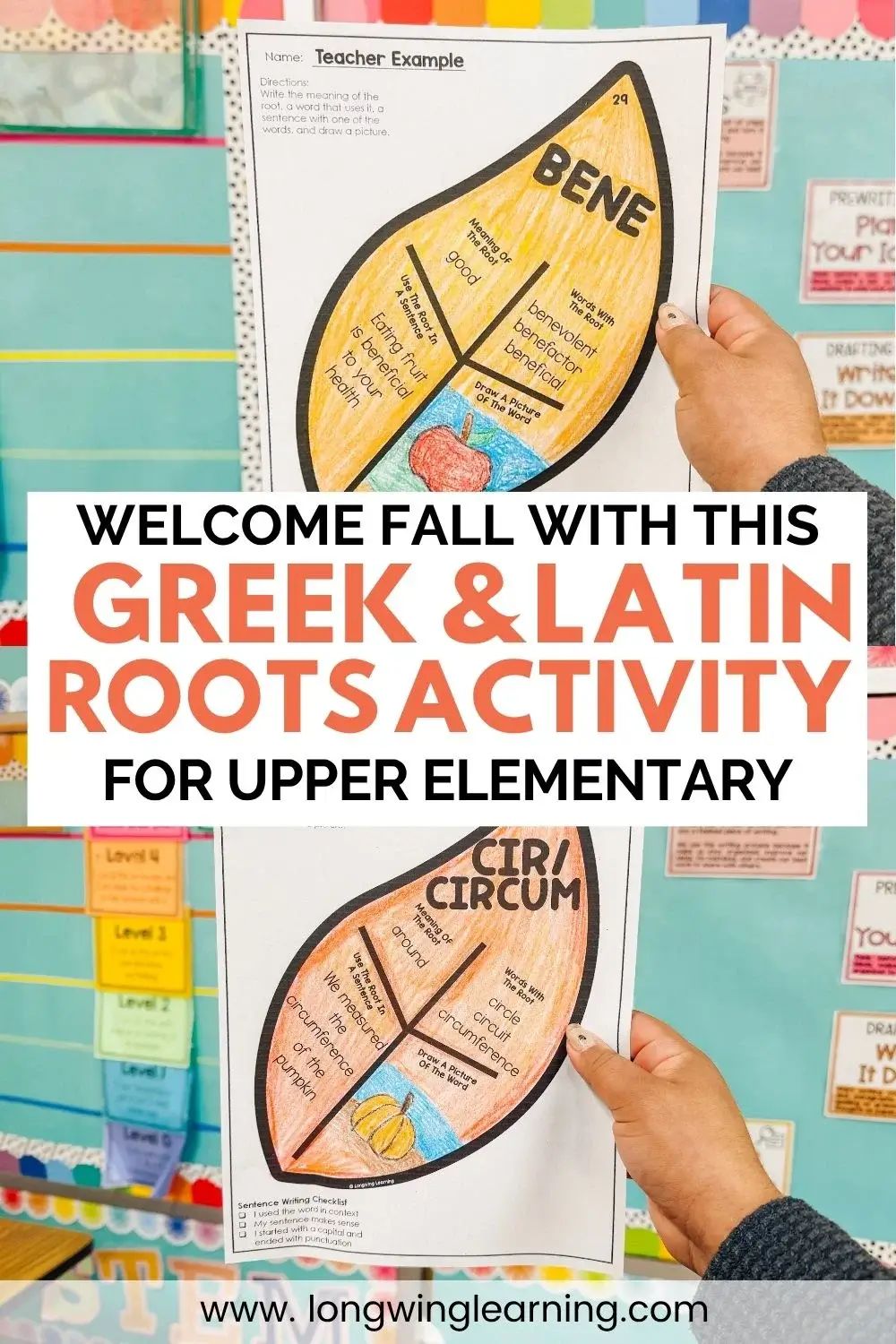
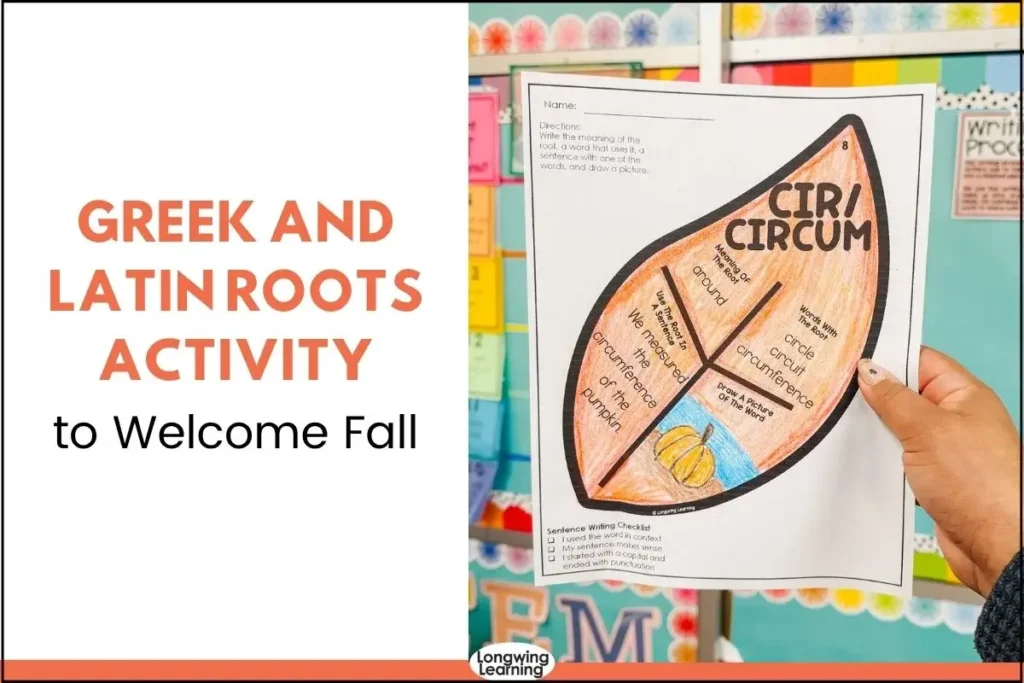
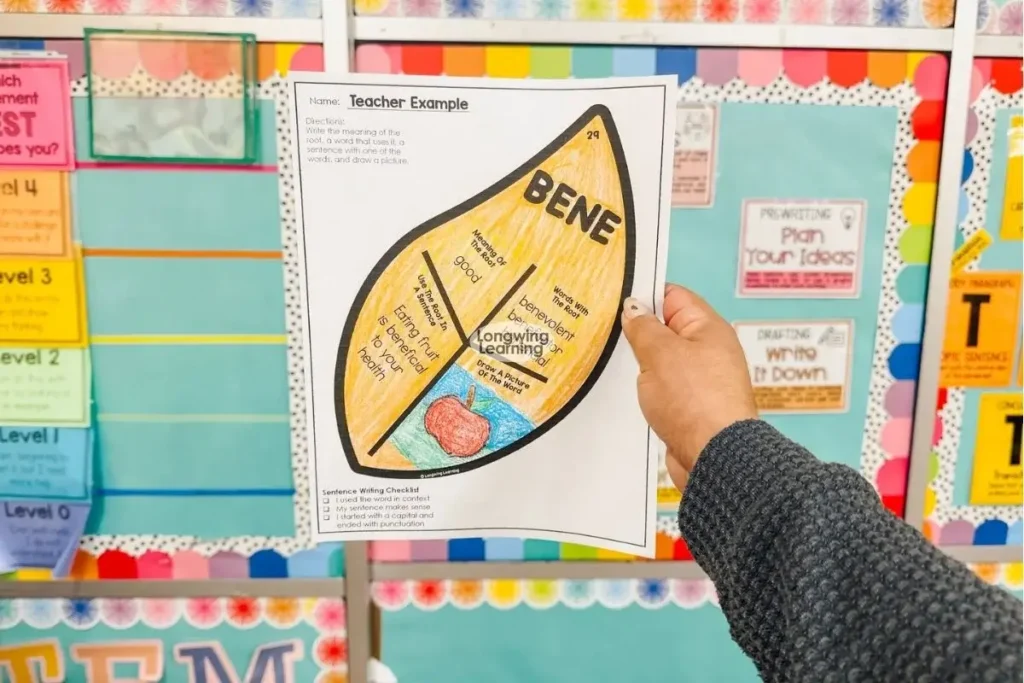
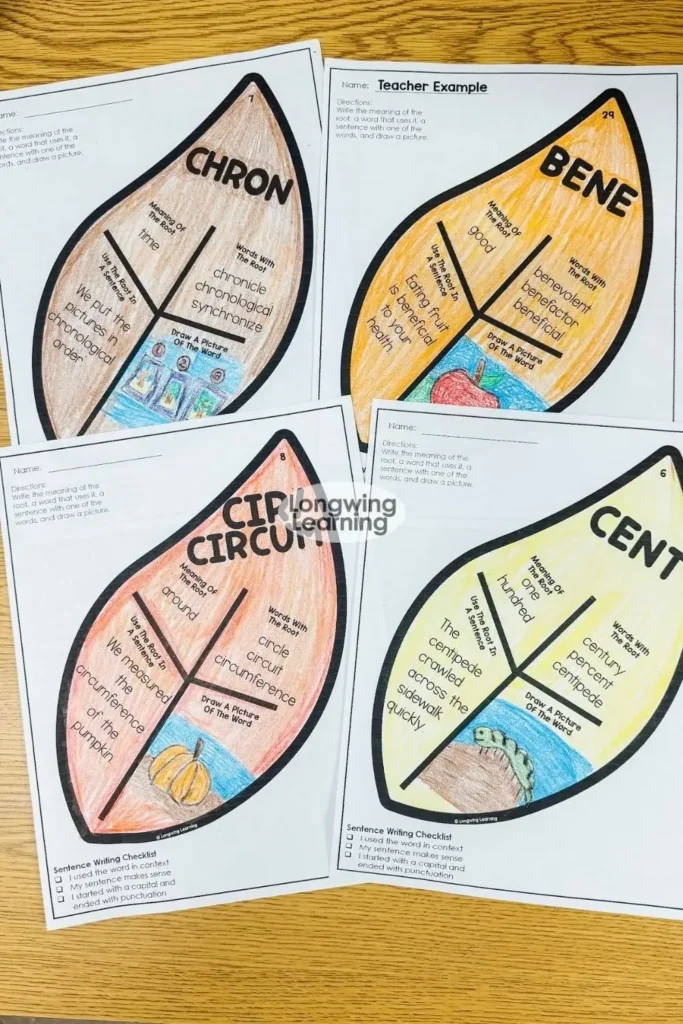
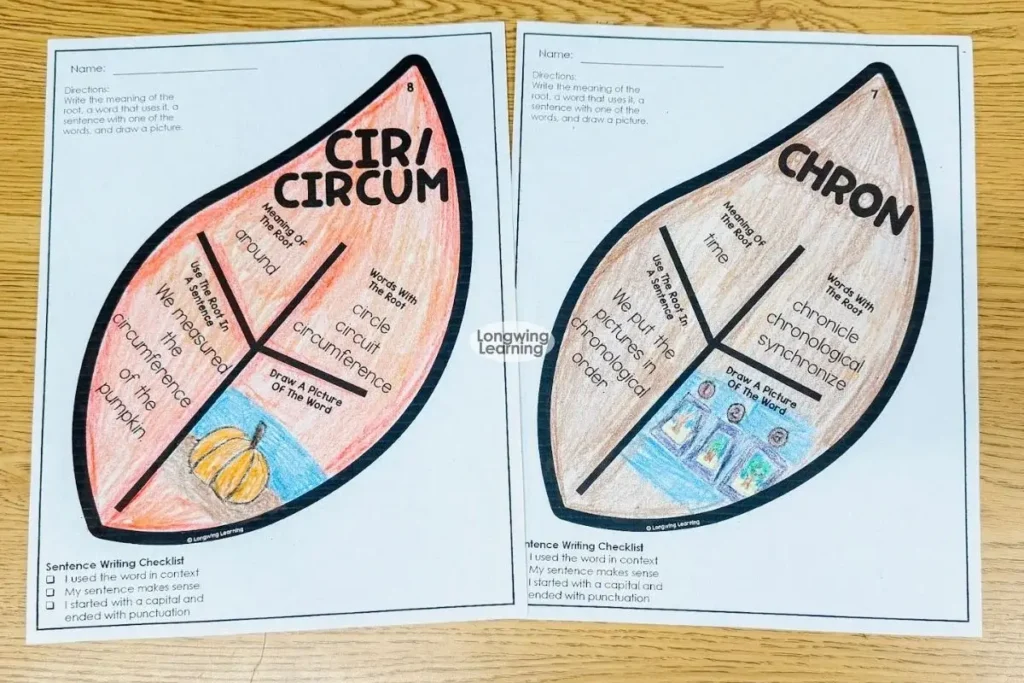
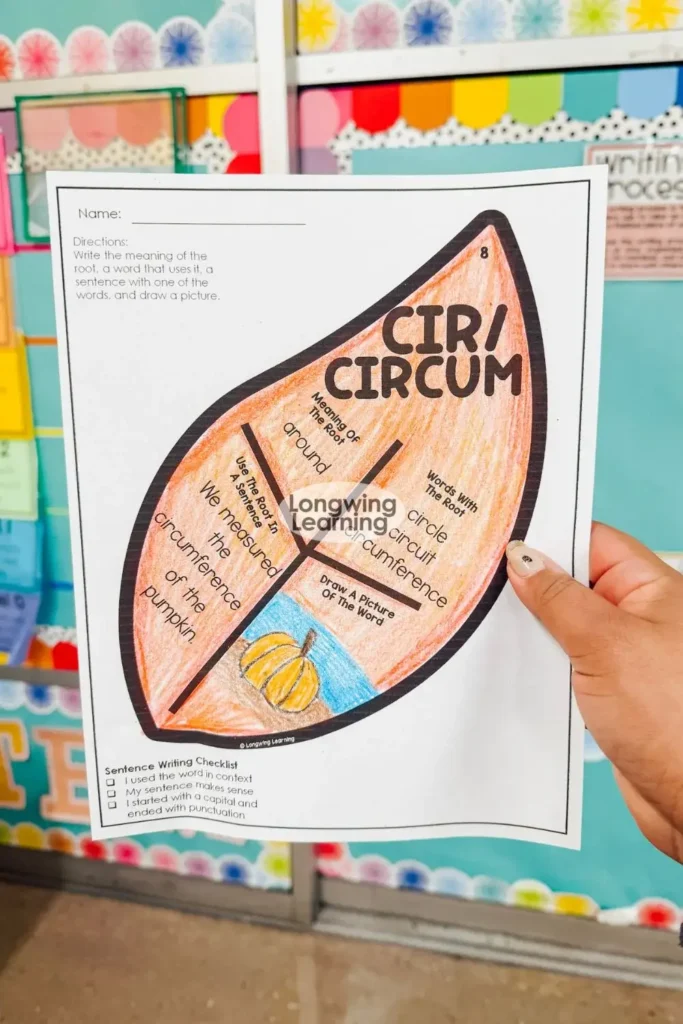
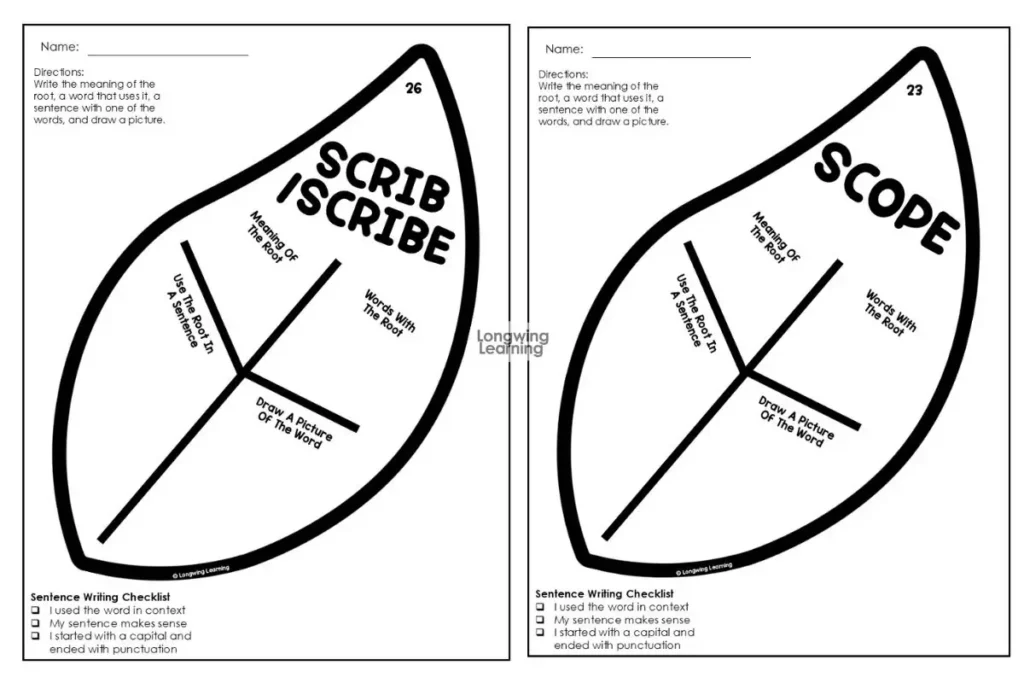
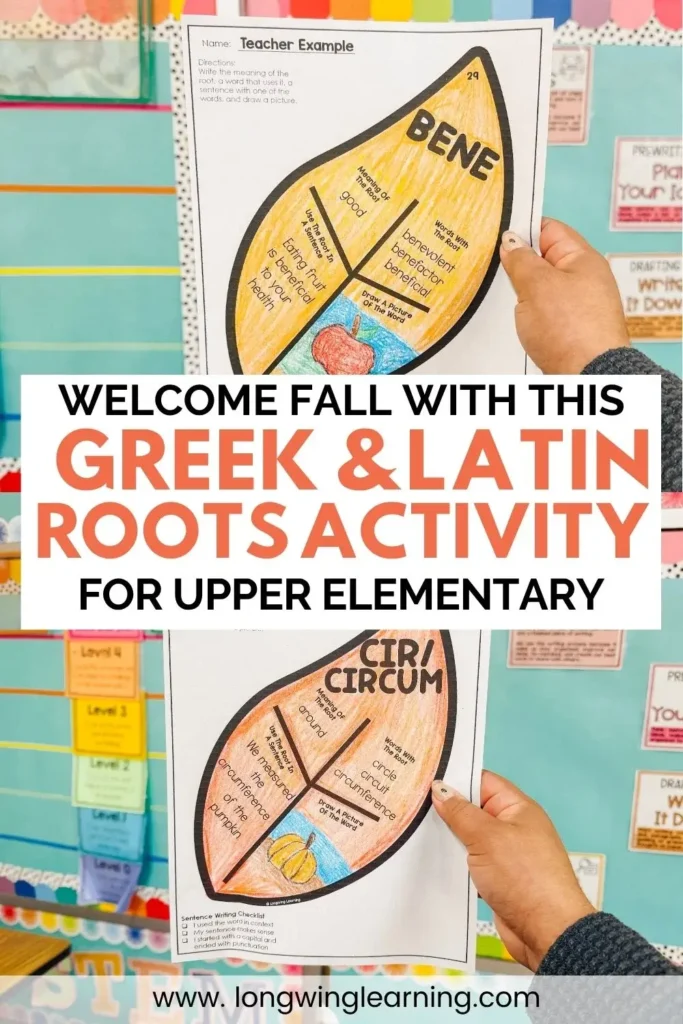
During the fall, I use a leaf template where students work through different roots. At first glance, it looks simple, but there is actually a lot going on.
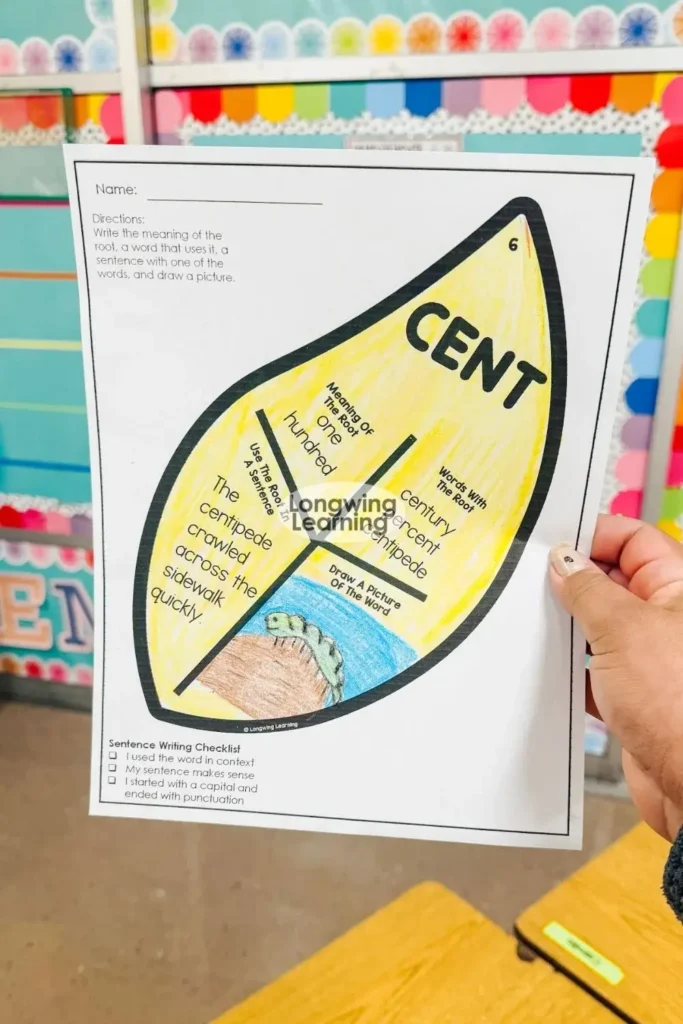
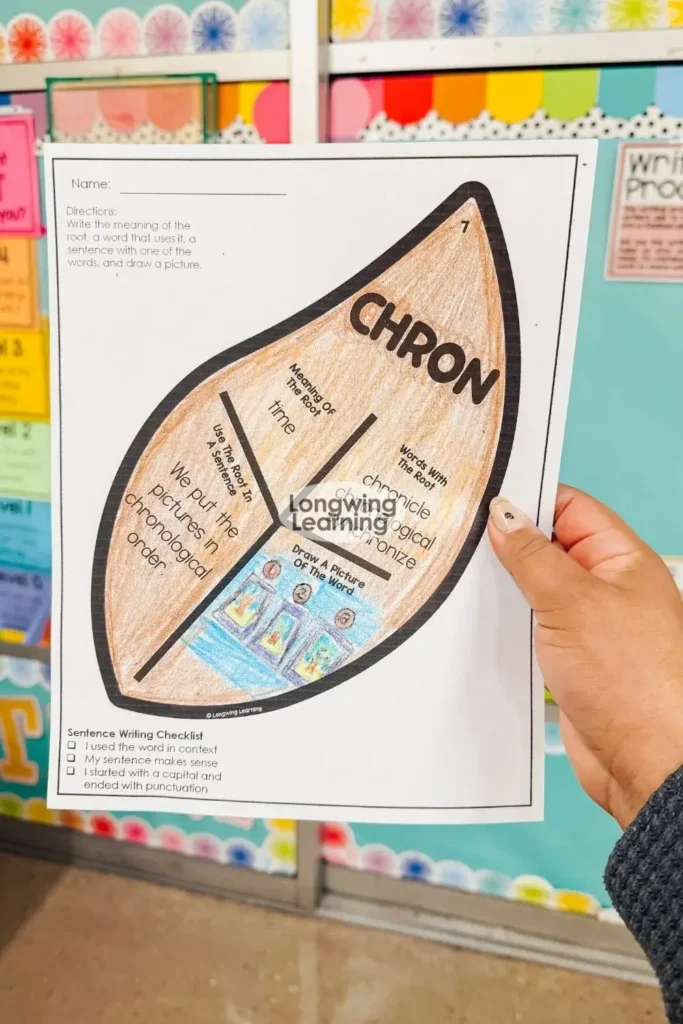
Students are writing the meaning of the root, identifying words that contain the root, choosing one word and writing a sentence, and connecting the meaning to something they understand.
I have noticed that when students are required to use the word in a sentence, that is when it really clicks.
They cannot just copy or guess, they have to actually think about what the word means.
How I Use This Activity During the Fall
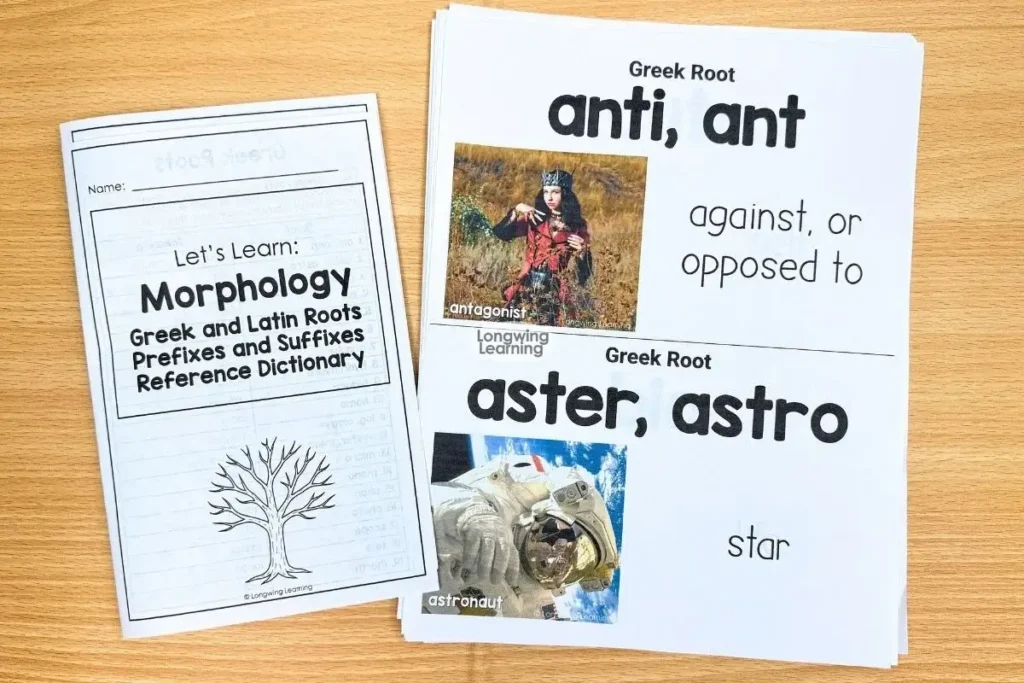
I do not overcomplicate how I use a fall Greek and Latin roots activity for 4th 5th grade. I fit it in wherever it makes sense based on our schedule.
Sometimes it is used as morning work when students come in. Other times, it becomes part of a center rotation or something for early finishers.
I have also sent it home as homework when I want students to take their time with it.
There are also times when I have not formally taught a root yet, and I still let students work with it.
I have found that giving them that early exposure actually helps when we come back to it later.
They recognize it, and it does not feel completely new.
Since I am working with a full set of 48 roots, I do not feel pressure to rush. I can spread them out and revisit them throughout the year.
Why Seasonal Activities Make a Difference in 5th Grade
This is something I did not realize at first, but it makes a big difference.
My fourth and fifth graders actually get excited about this type of activity.
At this age, students can quickly start to feel like everything is boring or repetitive.
But when I bring in a fall Greek and Latin roots activity for 4th 5th grade, something shifts.
They slow down. They pay more attention. They actually want to complete the work.
I have had students ask if we are doing another one, and that alone tells me everything I need to know.
That excitement becomes a big part of their learning.
When students are engaged, they are more likely to remember what they are doing, and in this case, that means remembering the roots.
Simple Ways to Extend This Activity
If I want to take it a step further, I keep it simple and realistic.
Sometimes I have students share their sentences with a partner and explain how the root connects to the word.
Other times, we review a few roots together as a class before they begin so they have a stronger starting point.
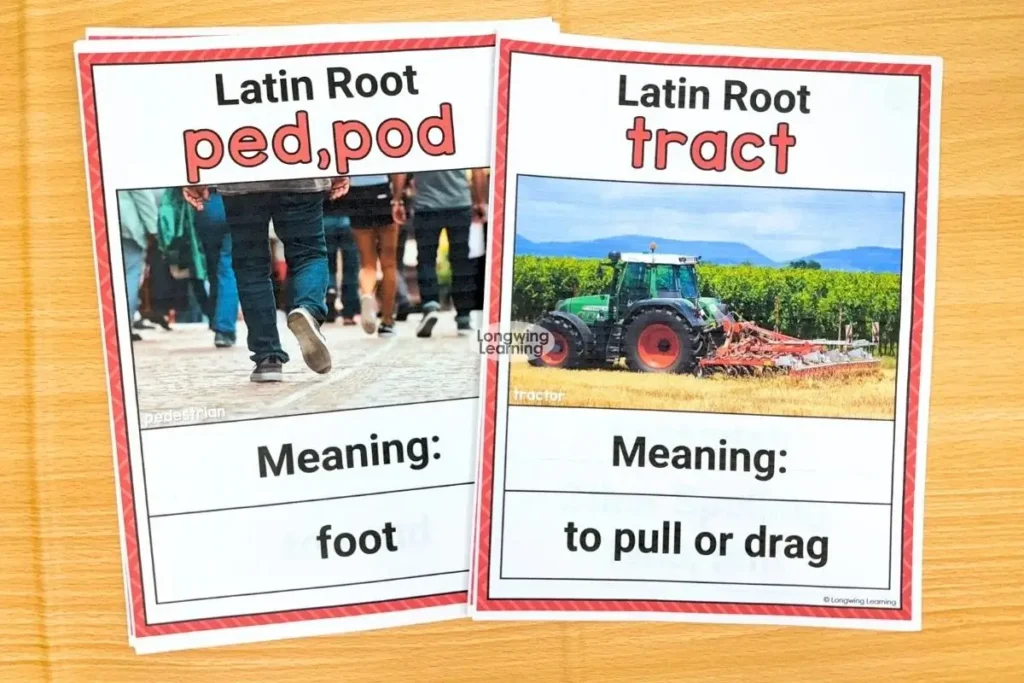
I have also used these as part of a bulletin board display.
Keeping the roots visible in the classroom gives students another layer of exposure.
Even when we are not directly working on them, they are still seeing them.
None of this requires extra planning, but it creates more opportunities for students to interact with the roots in meaningful ways.
How This Connects to Reading and Vocabulary Growth
At the end of the day, a fall Greek and Latin roots activity for 4th 5th grade is not just about completing a page.
I always remind my students that understanding roots helps them figure out unfamiliar words when they are reading.
Instead of skipping a word they do not know, they can break it apart and make a reasonable guess.
That is a skill they need for classroom learning, assessments, and independent reading.
When students begin to realize that they can figure out words on their own, their confidence grows.
That is when you start to see real progress.
Easy Fall Greek and Latin Roots Activity You Can Use Right Away
If you are looking for a simple way to use a fall Greek and Latin roots activity for 4th 5th grade without adding another full lesson to your day, this is something that has worked really well in my classroom.
It gives students the repetition they need, keeps them engaged, and does not require extra planning.
You can check out the leaf template Greek and Latin roots activity here.
If you are planning ahead for fall or just want something ready when you need a quick and easy review activity, save this post so you have it when the time comes.
FAQ: Teaching Greek and Latin Roots in Upper Elementary
How many roots should 4th and 5th graders learn?
There is no exact number, but I have found that working with a set like 40 to 50 roots over time with repeated exposure is more effective than trying to rush through too many at once.
Do students need to master each root before moving on?
No. The goal is exposure and repetition. Students build understanding over time as they see the roots again.
What if students do not know the root yet?
That is okay. Let them explore it, look at examples, and begin building familiarity. They do not need to know everything right away.
How often should I review roots?
Short and consistent practice throughout the week is more effective than one long lesson.