

Figurative language definitions and examples for upper elementary students don’t have to feel confusing for students.
Before they can analyze texts, they need to recognize what each type looks and sounds like.
This post breaks them down in a simple way so students can recognize each type before moving into deeper analysis.
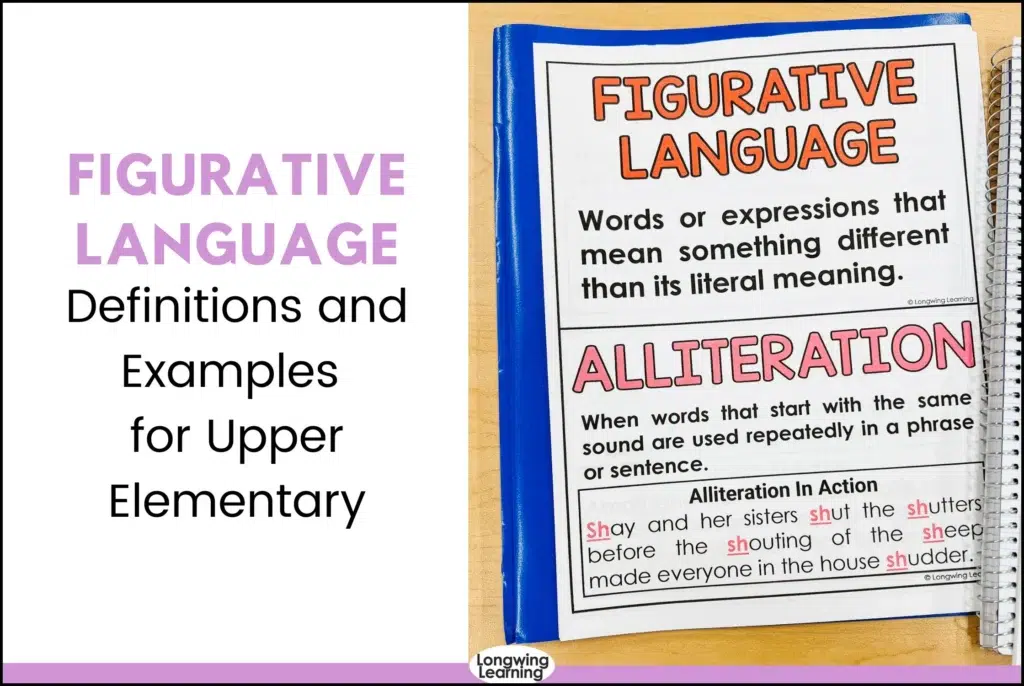
Figurative language is one of those skills that shows up everywhere in fourth and fifth grade.
Students are expected to identify it, interpret what it means, and explain the effect it has on a text.
But before they can do any of that, they have to actually know what each type is and be able to recognize it.
That’s usually where the struggle starts.
This post breaks down the most common types of figurative language in a way that’s simple and student-friendly.
These are the same definitions and examples I use in my classroom to help students build a strong foundation before we move into deeper analysis.
Table of Contents
What Is Figurative Language?
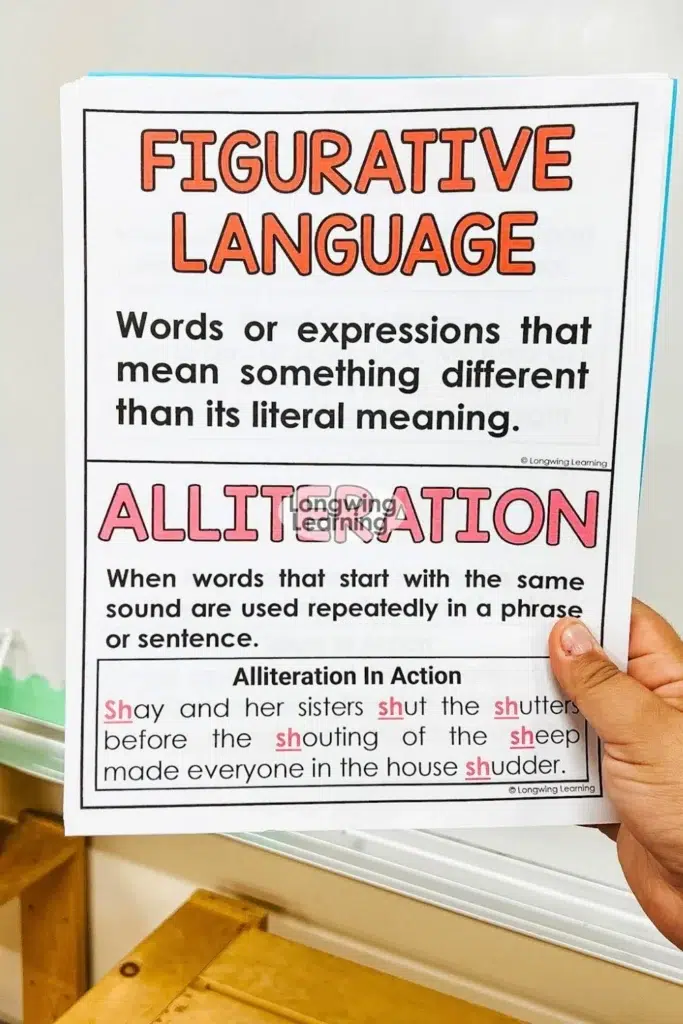
Figurative language is when an author uses words in a way that goes beyond the literal meaning.
Instead of saying exactly what they mean, authors use figurative language to:
- create a picture in the reader’s mind
- make writing more interesting
- help the reader understand ideas in a different way
Common Figurative Language Definitions and Examples for Upper Elementary
Before diving into each type, I like to introduce figurative language definitions and examples for upper elementary students to have a clear foundation.
Metaphor
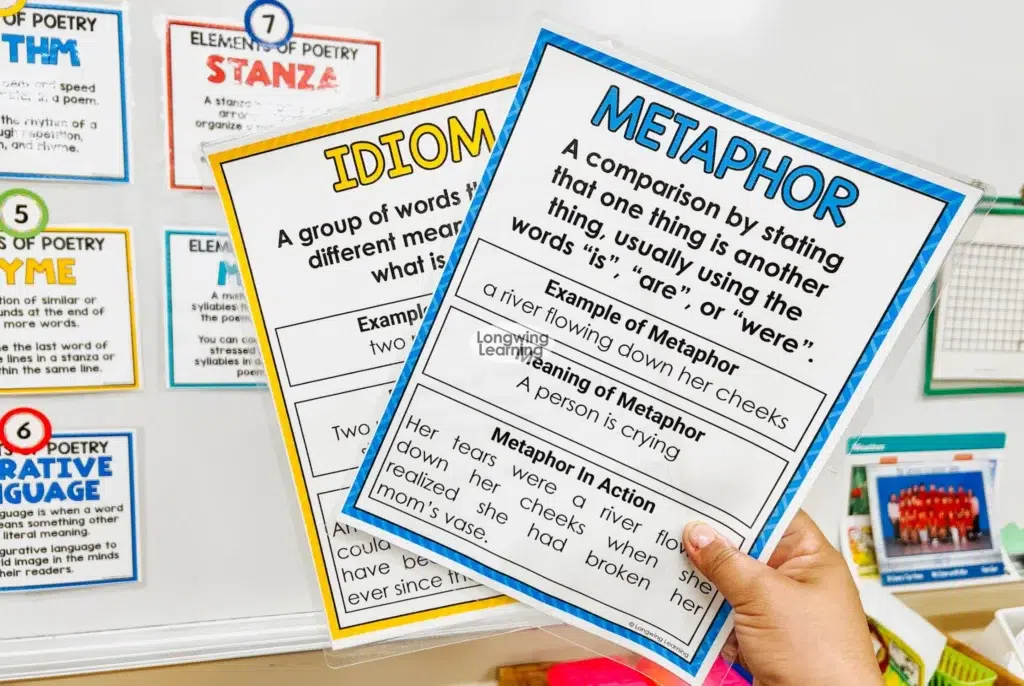
A metaphor compares two things without using like or as. It means that one thing is something else.
Example:
The classroom was a zoo.
When I teach this, I have students identify the who or what first. I’ll ask them, “The classroom is a what?” That question helps them see that we are saying the classroom is something else, not just similar to it.
This step really helps them understand the difference between similes and metaphors.
Personification
Personification gives human traits to something that is not human.
Example:
The wind whispered through the trees.
I have students start by identifying who or what the sentence is about. Then we look at what human quality is being added.
I also tell them if they ever forget what personification means, to look at the word. It has the word person in it, so it has to do with giving something qualities a person would have. That usually helps it stick.
Hyperbole
A hyperbole is an exaggeration that is not meant to be taken literally.
Example:
I’ve told you a million times to clean your desk.
This is one they already use all the time without realizing it. I usually point that out right away, and they catch on quickly.
Where I see students need the most support is actually saying the word. Once they get comfortable with the word itself, identifying it becomes much easier.
Idioms
An idiom is a phrase that does not mean exactly what the words say.
Example:
It’s raining cats and dogs.
This is one we work on all year long. A lot of idioms are tied to culture, and since many of my students come from different backgrounds, this can be a challenging one.
A couple of strategies that help:
- I have students match idioms to their meanings using examples and visuals
- We talk through what the phrase would mean if taken literally versus what it actually means
The discussion piece really helps students understand and remember them.
Alliteration
Alliteration is when words start with the same sound.
Example:
Peter Piper picked a peck of pickled peppers.
Sally sells seashells by the seashore.
Students love this one. I usually introduce it as tongue twisters, and they enjoy repeating them over and over.
I’ve noticed that not all students are familiar with these, so it’s fun to expose them to new ones and let them try them out.
There is more to alliteration, like assonance and consonance, but I save that for later when we get into poetry. At the beginning, I keep it simple and focus on repeated beginning sounds.
Onomatopoeia
Onomatopoeia is a word that represents a sound.
Example:
Buzz, crash, boom
Students love saying this word. I think it’s because it’s so long.
A lot of the examples they recognize come from comic books, so I like to connect it to that.
At the same time, I make sure to expose them to other sound words like thumping or clucking which many of these are verbs because they describe actions that make a sound.
Imagery
Imagery uses descriptive language to help the reader see, hear, feel, taste, or smell something.
Example:
The warm, buttery popcorn filled the room with a rich smell.
This is a big one in fourth and fifth grade. For many students, this is the first time they are hearing this term.
I connect imagery to the five senses, which also ties into science. We spend time identifying words that relate to each sense, especially when working with poetry.
This is one of the figurative language definitions and examples for upper elementary students that can be tricky for students at first.
Adages and Proverbs
Adages and proverbs are short sayings that give advice or share a lesson.
Example:
Actions speak louder than words.
For this one, I have students focus on the message. I ask them:
- What is the advice?
- Who might be saying it?
- Why are they saying it in this situation?
This helps them move beyond just identifying it and into understanding it.
I’ve also noticed students sometimes confuse these with idioms, so we spend time comparing the two.
Pun
A pun is a play on words that creates humor.
Example:
You are “grape” at reading.
These are always fun. I usually point out examples we already have in the classroom or things they’ve seen before.
Students may struggle at first, but once they understand the idea of wordplay, they catch on quickly.
How I Teach Figurative Language in My Classroom
Figurative language definitions and examples for upper elementary students are something I introduce early in the year so students can recognize and understand how they work in text.
For many of my students, some of these terms are new, especially imagery, adages and proverbs, and puns. Others like similes and hyperboles may be more familiar.
At this stage, my goal is not deep analysis. I focus on building vocabulary first so students can recognize each type.
As the year goes on, we come back to each one and go deeper. That’s when students begin to interpret meaning and explain the effect it has on the text.
Once students understand the basics, I focus on helping them recognize and explain figurative language in context.
I model examples, use short passages, and have students explain:
- what the phrase means
- why the author used it
- what is the author’s purpose for including it
This is where the real understanding starts to build.
Using Anchor Charts to Support Instruction
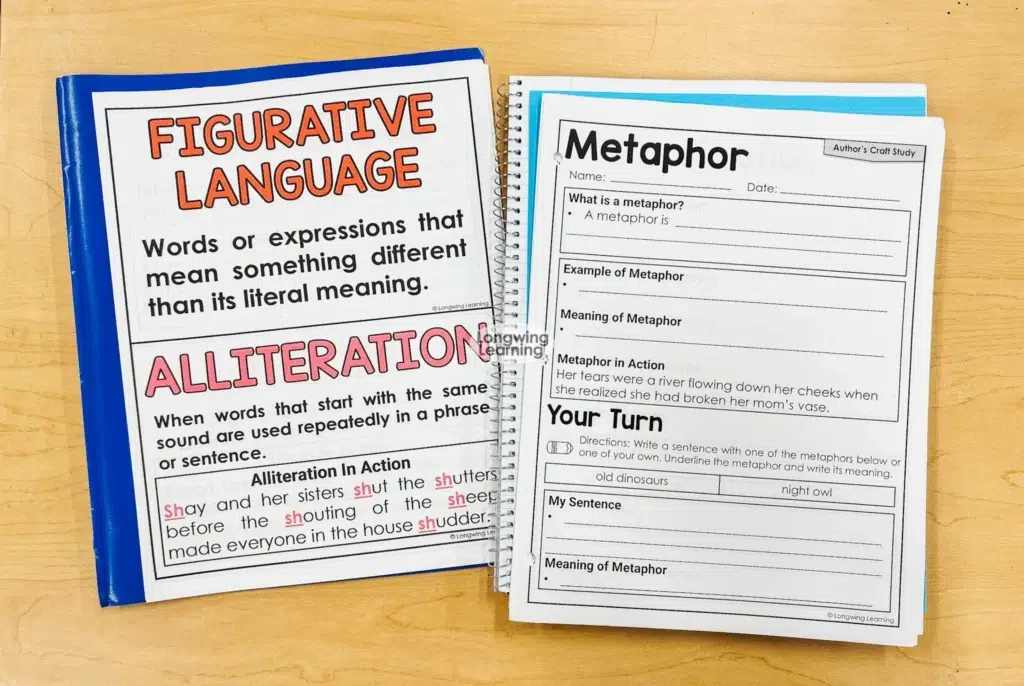
One thing that has made a big difference in my classroom is using figurative language posters as a reference.
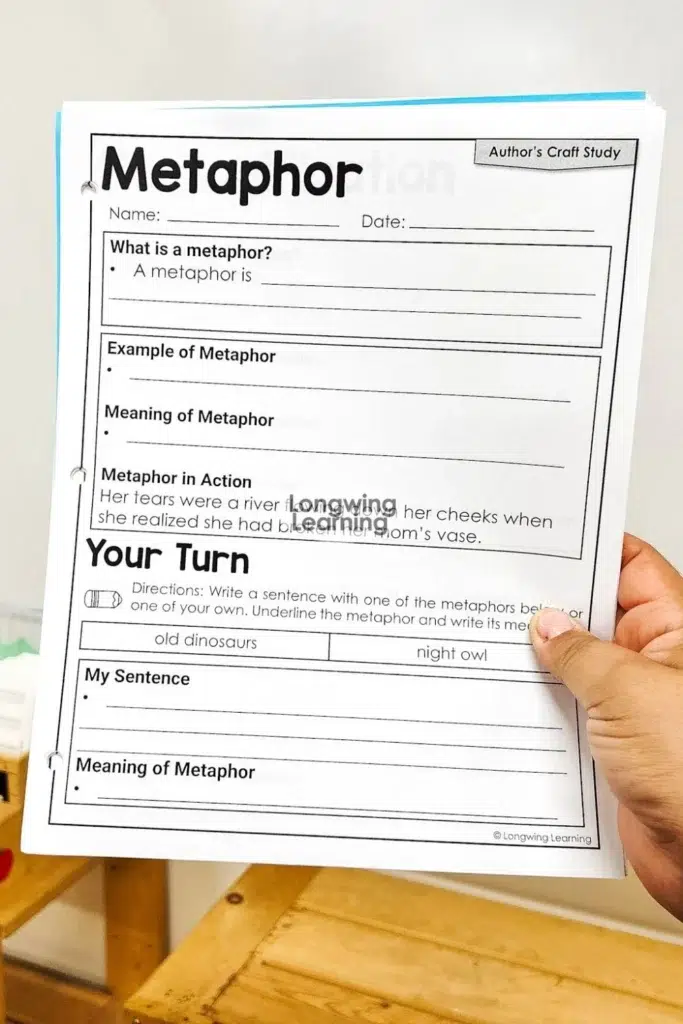
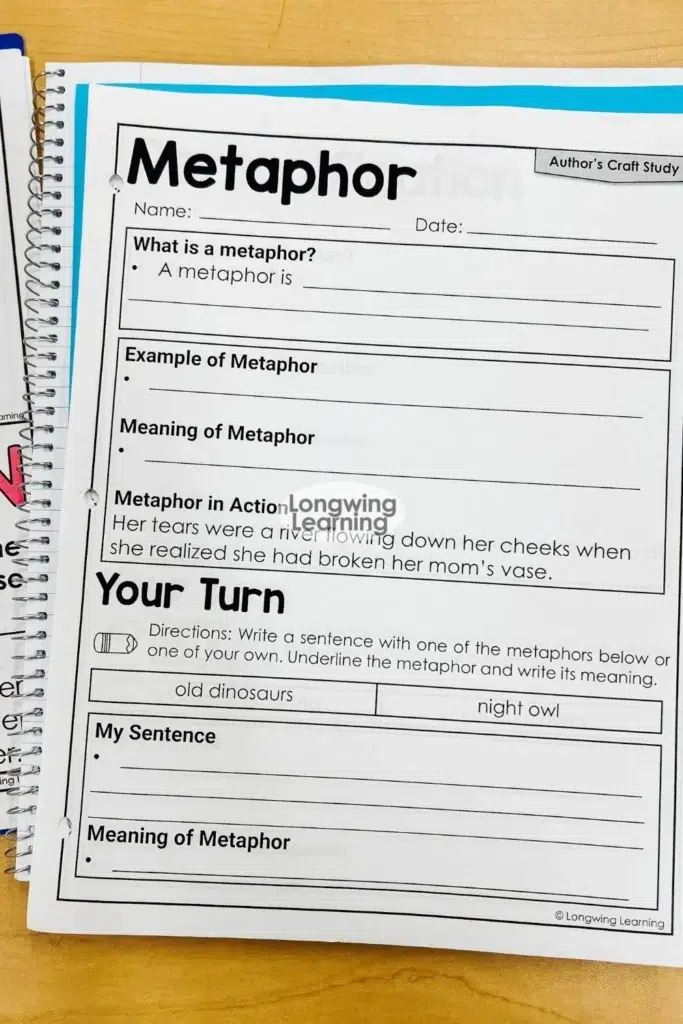
Instead of just explaining each type, I use these posters along with guided notes so students are actively writing and not just listening. The guided notes match the posters, which helps keep everything consistent.
I also keep a set of the half-sheet posters at my small group table. This makes it easy to review specific types during small group without having to reteach everything from scratch.
Students start to rely on these visuals, especially when they are working independently or answering questions about a text.
Building Toward Deeper Understanding
Once students can recognize each type of figurative language, it becomes much easier to move into deeper skills like interpreting meaning and explaining the author’s purpose.
That’s when I start focusing more on how figurative language affects the text, which is what they are expected to do on assessments.
A Simple Starting Point for Figurative Language
Teaching figurative language doesn’t have to feel overwhelming.
Starting with clear definitions, simple examples, and consistent visuals gives students the foundation they need before moving into more complex analysis.
Once students are familiar with these types of figurative language, everything else becomes easier.
They start to notice them in their reading, talk about what they mean, and explain how they impact the text.
That’s really the goal moving from just recognizing to actually understanding and using them.
If you want an easy reference to come back to when planning your lessons, save this post to Pinterest so you have these figurative language definitions and examples ready to use with your students.
FAQ: Figurative Language in Upper Elementary
What types of figurative language should students know in upper elementary?
Students should be familiar with similes, metaphors, personification, hyperbole, idioms, alliteration, onomatopoeia, imagery, adages and proverbs, and puns.
Why do students struggle with figurative language?
Many students struggle because they try to take everything literally. They need practice recognizing when language is being used in a different way.
How do you teach figurative language effectively?
Start with simple definitions and examples, use visuals like posters, and give students plenty of practice identifying and explaining figurative language in context.
More Figurative Language Activities
If you’re looking for more ways to teach figurative language, I break down each type into its own lesson with activities and examples.