

These New Year goal setting activities for upper elementary give students a simple way to reflect, reset, and start the second half of the school year with a clear focus.
January always feels a little like a second back-to-school season in my classroom.
Students come back from winter break excited to see their friends, completely out of their normal routines, and usually needing a little help getting back into school mode.
Instead of jumping straight into our regular routine, I like using a few New Year goal setting activities to help students reflect, reset, and think about what they want to accomplish during the second half of the school year.
Some years, I want a quick activity we can finish during morning work.
Other years, I want something more meaningful that turns into a writing lesson or classroom display.
That is why I put together this list of New Year activities for upper elementary students.
Some take only a few minutes, while others can easily turn into a full writing lesson or bulletin board.
You definitely do not need to do all 11.
Choose the activity that works best for your students and the amount of time you have after winter break.
Quick New Year Reflection Activities
If you only have 10 or 15 minutes, these activities are an easy way to get students thinking about the new year without planning an entire lesson.
1. Start With a Morning Reflection
One of the easiest ways to start the first day back is with a simple reflection.
I like asking students to think about one thing they are proud of from the first half of the school year and one thing they would like to improve.
This keeps the conversation from focusing only on what students need to “fix.”
They also have an opportunity to recognize something they have already accomplished.
You can have students write their responses in a notebook, on a sticky note, or on a simple half-sheet of paper.
I also like reading their responses because they give me a quick glimpse into how students are feeling as we start the new semester.
Best for: Morning work or the first 10 minutes of class
Prep: Almost none
2. Try a One Word Challenge
Instead of asking students to write an entire New Year’s resolution, ask them to choose one word that represents something they want to focus on.
Students might choose words such as growth, kindness, confidence, focus, or persistence.
The important part is asking students to explain why they chose their word.
Otherwise, it can quickly turn into students choosing a word because it sounds good without thinking about what it actually means for them.
Students can write their word on an index card and add one or two sentences explaining their choice.
They can keep the card in their folder, tape it inside a notebook, or add it to a classroom display.
Best for: A quick personal reflection
Prep: Index cards or small pieces of paper
3. Create a Class Word Cloud
If you like the One Word activity but want to turn it into something for the whole class, combine everyone’s words into a class word cloud.
Have each student contribute the word they chose for the semester.
Then use the words to create one class display.
You can create the word cloud digitally or simply write the words on chart paper in different sizes and styles.
I like this version because students still choose an individual focus, but the final display shows what the class wants to work toward together.
Best for: Classroom community building
Prep: Low
New Year Goal Setting Activities
If you have more time, January is a great opportunity to actually teach students what makes a goal useful.
This is especially important with upper elementary students because their first goals are usually very broad.
I hear things like “get better at reading,” “get good grades,” or “be nicer.”
Those are not bad goals, but students need help turning them into something they can actually work toward.
4. Sort Vague and Specific Goals
Before students write their own goals, spend a few minutes comparing vague and specific examples.
For example, compare “read more” with “read for 20 minutes four nights each week.”
Ask students which goal would be easier to follow and why.
You can repeat this with examples from math, writing, organization, homework, friendships, or other areas that make sense for your students.
I like doing this before students begin writing because it gives them a much clearer picture of what I mean when I ask for a specific goal.
You can even turn it into a quick whole-group activity by reading two goals aloud and having students decide which one is more specific.
Best for: Introducing goal setting before students write
Prep: A few sample goals
5. Plan the Steps to Reach a Goal
Once students have selected a specific goal, the next step is figuring out what they will actually do to reach it.
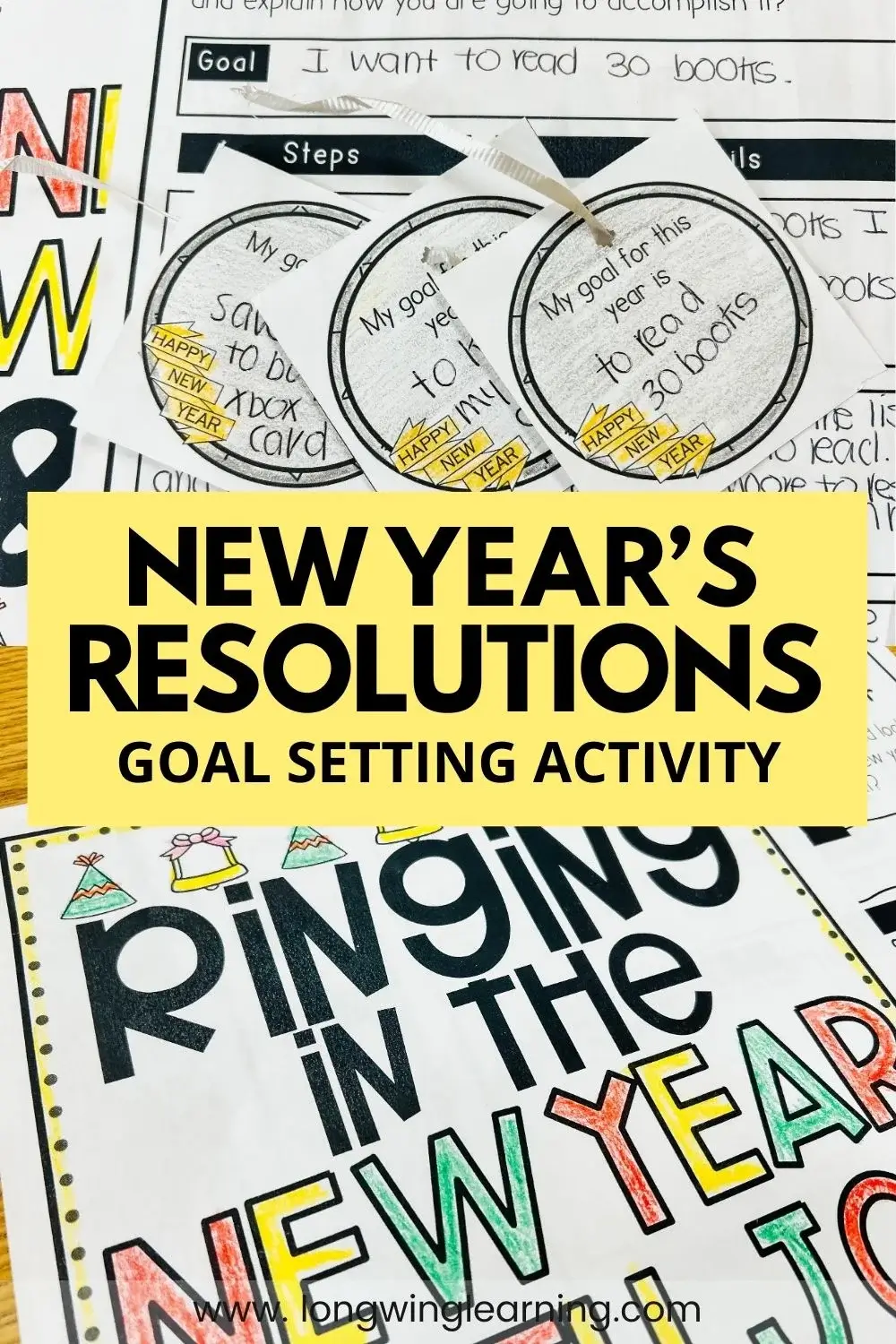
This is where I use my New Year goal setting writing activity.
Before students begin drafting, we talk about the difference between choosing a goal and making a plan.
I ask questions such as, “What are you actually going to do?” and “How often are you going to do it?”
We also talk about possible roadblocks.
For example, a student might plan to read every night but realize that soccer practice makes that difficult on certain days.
Instead of abandoning the goal, the student can create a backup plan.
That small conversation makes the activity much more meaningful than simply writing a New Year’s resolution.
Students use the planning pages to choose a goal, break it into action steps, think about possible challenges, and explain how they plan to reach it.
[ADD NEW YEAR GOAL SETTING WRITING PROMPT LINK]
For a closer look at the entire writing lesson, you can also read my post about my New Year Goal Setting Writing Prompt.
Best for: A complete writing lesson
Prep: Print the planning and writing pages
6. Brainstorm Academic Goals Together
Some students freeze when they are asked to come up with a goal on their own.
A quick class brainstorm can help.
Create categories such as reading, writing, math, organization, and classroom habits.
Then ask students to brainstorm possible goals for each category.
For reading, students might suggest reading every night, finishing more books, improving reading fluency, or using text evidence more carefully.
For organization, they might suggest turning in homework on time or keeping their desk organized.
Students can use the class list as inspiration, but they should still choose a goal that actually applies to them.
Best for: Students who need help generating ideas
Prep: Chart paper or your whiteboard
7. Create a Goal Wall
If you want students to revisit their goals instead of forgetting about them after January, create a simple Goal Wall.
Have each student write one specific goal on a sticky note or small card.
Post the goals somewhere students can easily see them.
Then come back to the wall later in January or once a month.
Students can reflect on what is working, what needs to change, and whether they have reached their goal.
You can even let students replace their original goal once they accomplish it.
This turns goal setting into an ongoing process instead of a one-day January activity.
Best for: Ongoing goal check-ins
Prep: Sticky notes or small cards
New Year Writing Activities
Not every January activity has to focus completely on resolutions.
The first week back is also a good opportunity to get students writing again with topics they already have plenty to say about.
8. Write About Winter Break Memories
After a long break, students usually have stories they are eager to share.
A personal narrative about winter break is an easy way to transition back into writing.
I use my January After Winter Break Personal Narrative Writing Prompt to help students organize one specific memory instead of trying to write about their entire vacation.
Students choose a moment, plan the important details, and turn it into a short personal narrative.
It works especially well when I want students practicing narrative writing without introducing a brand-new topic during the first few days back.
[ADD WINTER BREAK WRITING PROMPT LINK]
You can also find more ideas in my post with Back From Winter Break Activities.
Best for: Narrative writing practice
Prep: Writing paper or narrative planning pages
9. Write a New Year Acrostic Poem
For a shorter creative writing activity, have students create an acrostic poem using NEW YEAR or GOALS.
Each letter begins a line connected to something the student hopes to accomplish or experience.
For example, the letter N might begin with “Never give up when work gets difficult.”
The letter E might begin with “Encourage my classmates.”
This activity gives students a chance to think about the new year without requiring a full essay.
Finished poems can also be added to a January bulletin board or students’ writing folders.
Best for: A short creative writing activity
Prep: Lined paper or an acrostic template
New Year Bulletin Board and Display Ideas
If I am already spending time on a New Year activity, I love when the finished work can double as a classroom display.
These last ideas make students’ goals visible without adding a completely separate bulletin board project to your list.
10. Create a New Year Goal Banner
One of my favorite options is having students turn their goals into a pennant banner.
Students choose an academic or personal goal, write it on their pennant, and decorate the page.
Once everyone finishes, the pennants become an easy New Year bulletin board or classroom banner.
What I like most is that the display is not just decoration.
Students are looking at something they actually wrote and thought about.
You can also use the banner as a reason to revisit their goals later in the month.
Ask students whether they are still working toward the same goal, whether anything needs to change, or whether they are ready for a new one.
If you want to use the same banner I use, you can find my New Year’s Goals Upper Elementary Goal Setting Banner here.
[ADD NEW YEAR GOAL BANNER LINK]
Best for: Goal setting plus an easy classroom display
Prep: Print, write, color, and hang
11. Make a New Year Goal Foldable
Another hands-on option is creating a simple foldable with several sections for students to record different parts of their goal.
Instead of tying the foldable to a specific year, make the sections evergreen so you can reuse the activity every January.
For example, students could include sections for My Goal, My Action Steps, Possible Roadblocks, and How I Will Know I Reached It.
Students can add drawings, color the foldable, and keep it in their notebook or display it in the classroom.
This gives students another way to work through the goal-setting process without requiring a long writing assignment.
Best for: A hands-on goal setting activity
Prep: Paper and basic folding
How I Choose Which New Year Activity to Use
You do not need to squeeze all of these New Year goal setting activities into the first week back.
I usually choose based on what my students need most.
If we need a calm transition back into school, I start with the Morning Reflection or One Word Challenge.
If I want to teach students how to set meaningful goals, I use the vague versus specific goal activity and move into the New Year goal setting writing prompt.
If I need writing practice, I choose the winter break narrative or acrostic poem.
If my bulletin board needs an update anyway, I use the goal banner so the writing becomes part of the classroom display.
The activity matters less than giving students a chance to stop, reflect, and think intentionally about what they want the second half of the school year to look like.
Don’t Forget to Revisit the Goals
One thing I have learned about New Year goal setting is that the first lesson is only the beginning.
Students are much more likely to remember their goals when we bring them back into the conversation.
At the end of January, ask students to look at the goal they created.
They can reflect on what is working, what has been difficult, and what they want to change.
You can repeat the same quick check-in once a month without turning it into another major assignment.
Sometimes students reach their original goal and need a new one.
Sometimes they realize that the plan they created was not realistic.
Both situations give students another opportunity to practice reflection and problem solving.
Start the New Year With a Fresh Classroom Reset
Coming back from winter break does not have to mean jumping immediately into a full week of regular lessons.
A simple reflection, goal-setting conversation, or writing activity can help students ease back into classroom routines while thinking about what they want to accomplish next.
Whether you choose a five-minute reflection, a complete New Year writing lesson, or a goal-setting bulletin board, I hope one of these ideas makes your first week back a little easier.
If you want to use the same New Year goal setting materials I use, you can find the writing activity and goal banner linked above.
And if you are planning ahead for January, save this post to Pinterest so you can come back to these New Year activities when you need them.