

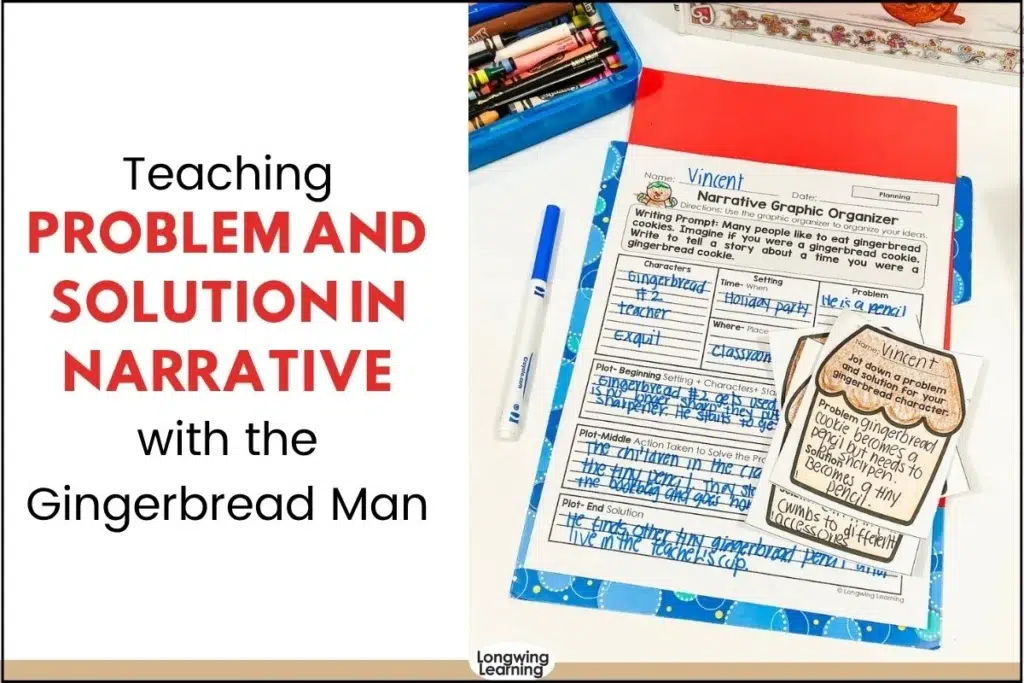
Teaching problem and solution in narrative writing can help students move beyond stories that are simply a list of events.
When students understand how a character’s problem drives the story forward, they can write a beginning, middle, and ending that connect.
You ask your students to write a story. They write a lot. You’re excited. Then you start reading.
“I went to the park. And then I went on the swings. And then I got ice cream. And then I went home. The end.”
It’s not a story. It’s a list.
If you’ve ever graded a stack of narratives, you’ve probably read a few of these.
The good news is that the fix isn’t more writing time or a longer graphic organizer.
t’s one idea: every story needs a problem, and every problem needs a solution.
In this post, I’m sharing a simple Problem, Try, Solve strategy you can use during your next narrative writing lesson.
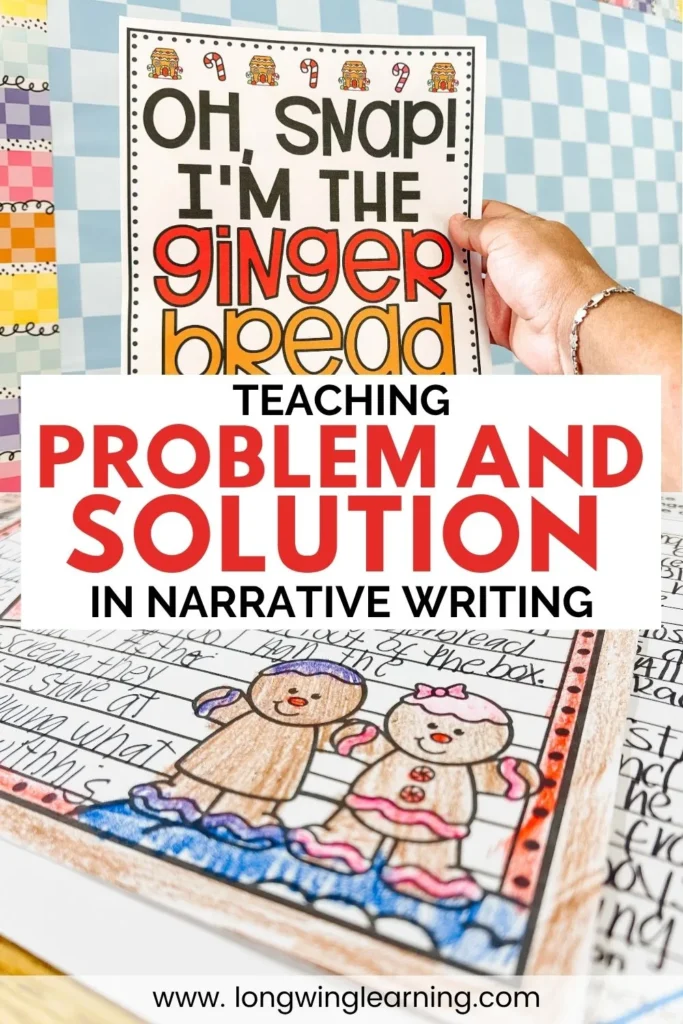
I’ll also show you how I use the Gingerbread Man as a mentor text to help students put this strategy into practice.
Why Students Struggle with Problem and Solution in Narrative Writing
When a story has no problem, nothing pushes it forward. Kids know they need a beginning, a middle, and an end, so they fill the middle with whatever happened next.
Every event gets the same weight, and the story just stops when they run out of things to say.
A problem changes that. Once the character wants something or has to get away from something, every event has a job.
It either helps the character, gets in the way, or makes things worse.
That’s what gives a story a middle worth reading.
That’s why, before transitions, dialogue, or sensory details, it helps to teach one thing: find the problem first.
Start with a Clear Story Problem
The hardest part of a narrative for a lot of kids is coming up with a problem.
So for this lesson, the prompt hands it to them:
Many people like to eat gingerbread cookies.
Imagine you are a gingerbread cookie, and someone wants to eat you!
Write a story about what happens and how you solve the problem.
The problem is built right in.
Someone wants to eat you! Students don’t have to invent a conflict.
Their job is to figure out what happens next and how their cookie gets out of it.
That one change keeps students focused on the part of the story that matters most: the solution.
Use Mentor Texts to Teach Problem and Solution
Use the Gingerbread Man as a Mentor Text
Here’s what makes the classic Gingerbread Man story such a great mentor text for problem and solution: in most versions, he never solves his problem.
Everyone wants to eat him, so he runs.
He outruns one character after another, and he gets more and more confident.
Then he meets the fox at the river, trusts him, and gets eaten.
That ending gives you a perfect question to ask your class: What could the Gingerbread Man have done differently?
Many of my students have never heard the Gingerbread Man story before, so the read-aloud does double duty.
It introduces a classic tale, and it gives kids a clear model of a character with a big problem.
Once students see that the cookie had a problem and didn’t solve it, they’re ready to write a story where they do.
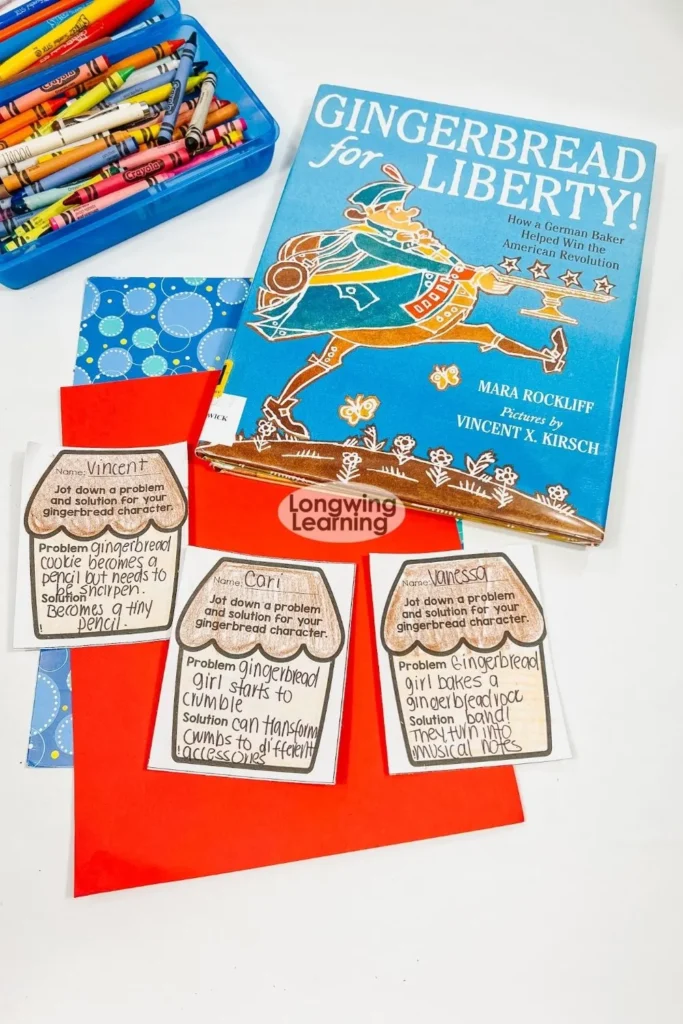
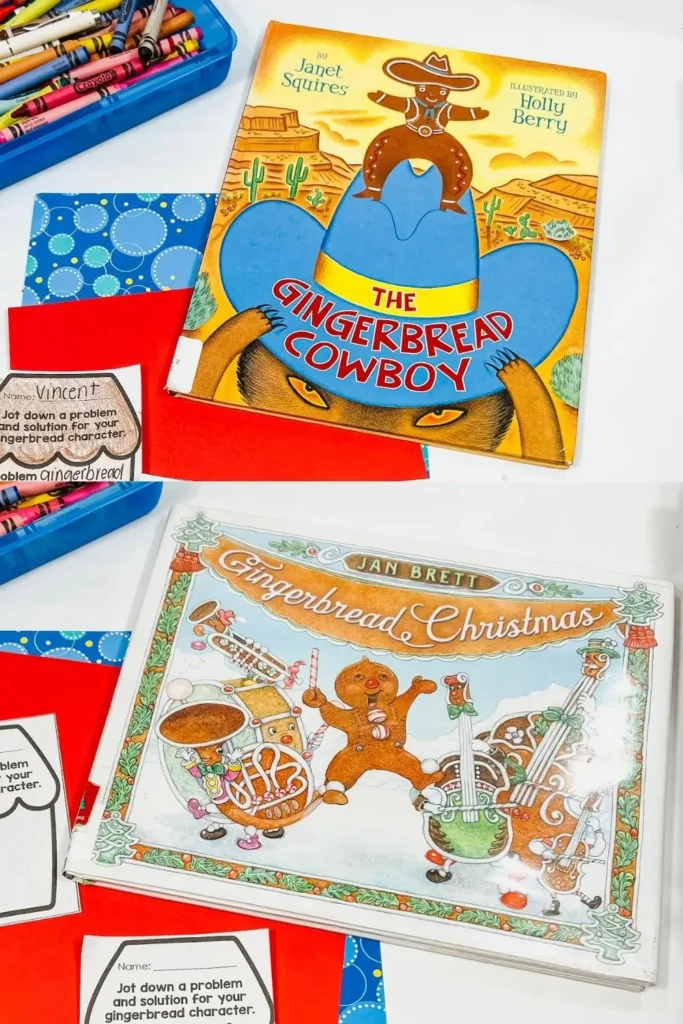
Reading a few different versions during the week helps too.
Each author handles the chase and the ending in a different way, which shows kids there’s more than one way to solve the same problem.
A Simple Narrative Writing Mini Lesson: Problem, Try, Solve
This mini-lesson takes about 15 minutes.
Draw three boxes on the board and label them Problem, Try, and Solve.
Then fill them in together using the Gingerbread Man story.
- Problem: What does the character want, or what do they need to get away from? (Everyone wants to eat the Gingerbread Man.)
- Try: What does the character do about it? Does it work? (He runs. It works for a while, until it doesn’t.)
- Solve: How does the problem end? (In the original, it doesn’t end well for him!)
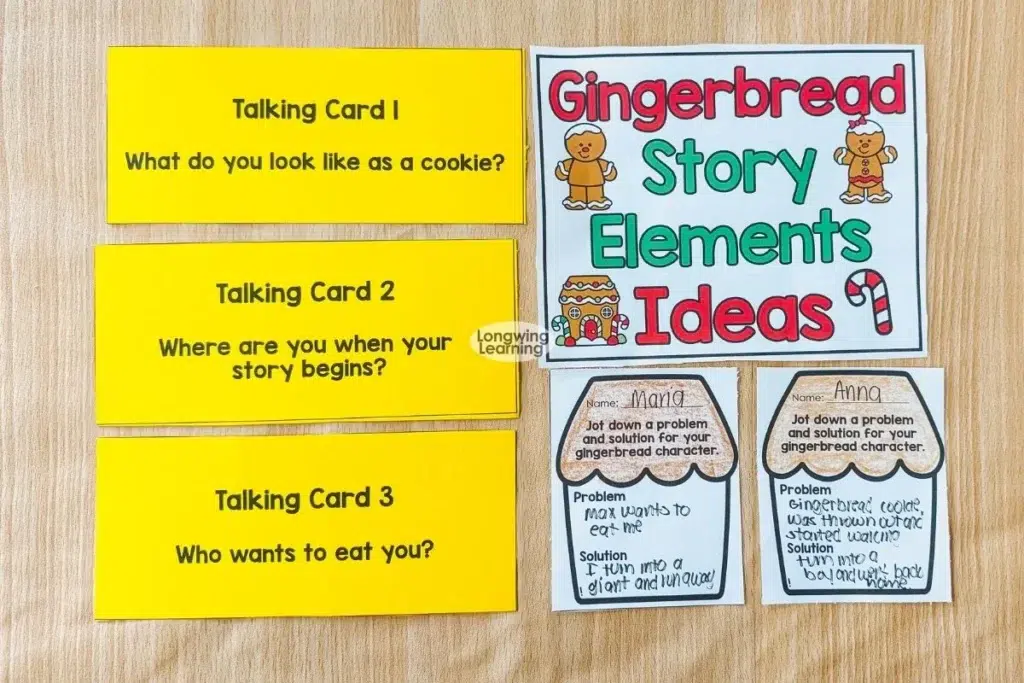
Then have students talk with a partner about how their cookie could get through the Try and Solve boxes.
Partner talk matters here. When kids say their idea out loud first, they figure out pretty quickly if it makes sense.
The Try box is the one kids often skip.
They jump straight from the problem to a happy ending.
Remind them that a good story usually needs at least one try that doesn’t work.
That’s where the excitement is.
Help Students Write Stronger Story Solutions
Once kids have a problem, the next trap is a solution that comes out of nowhere.
Showing a few examples side by side helps students see the difference fast.
Here are some I’d share with students:
| Weak solution | Why it’s weak | Strong solution |
|---|---|---|
| “Then I ran away and I was safe. The end.” | It happens too fast. There’s no try, and nothing gets in the way. | “I ran to the door, but it was closed. So I hid behind the flour bag and waited until he turned around to get milk.” |
| “Then I woke up and it was all a dream.” | It erases the whole story. Nothing the character did mattered. | “I climbed up the Christmas tree and hung on a branch like an ornament. I stayed very still, even when he walked right past me.” |
| “A wizard came and saved me.” | Someone else solves the problem, and the wizard was never in the story before. | “I knew Grandma loved her tree decorations, so I hung myself right next to her favorite ornament. When she saw me, she said I was too pretty to eat!” |
What do the strong solutions have in common? The character does something.
It takes effort. And it connects to something that already happened in the story.
The strong examples are based on the completed example story in my resource, so students can see how a full story builds up to that ending.
Three Questions to Help Students Revise Their Narratives
Before students start drafting, have them check their solution with three quick questions.
These work for any narrative, not just gingerbread stories.
- Did my character solve the problem? Not a wizard, not a parent, not a dream. The main character should do something.
- Did my character try at least once before it worked? One try that fails makes the ending feel earned.
- Does my solution connect to something earlier in the story? If the cookie hides on the tree, the tree should show up before the ending.
If a student answers “no” to any of these, that’s their revision goal.
It’s a lot more specific than “add more details,” and kids can actually do it.
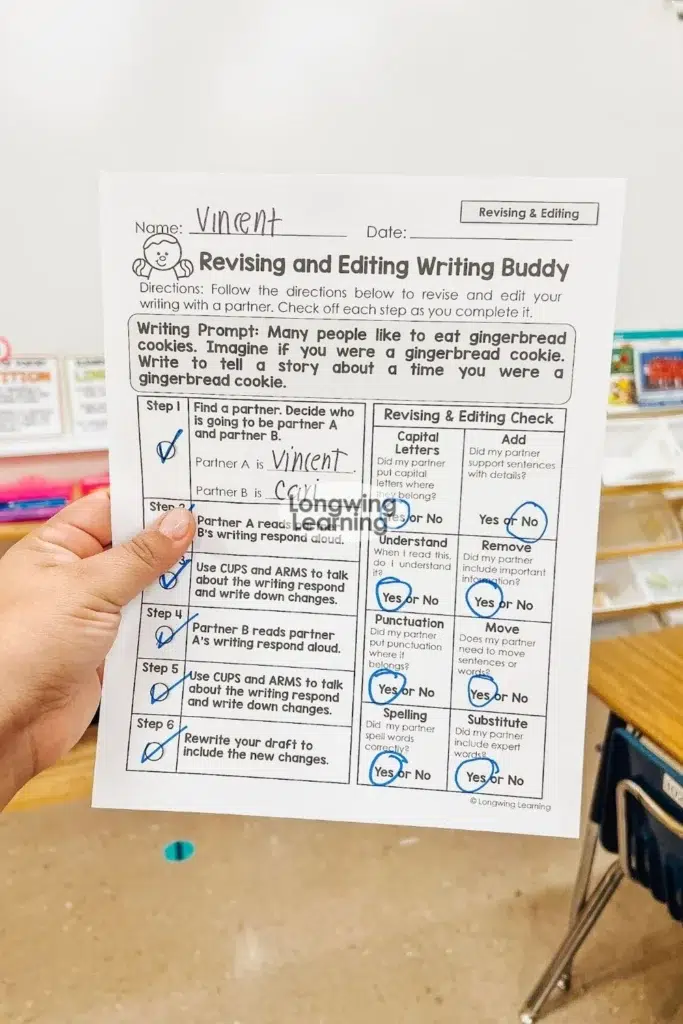
These questions also make great partner talk.
During peer revision, partners can ask each other the three questions instead of just saying “it’s good.”
How to Support Students Who Struggle with Narrative Writing
Some students will understand problem and solution in narrative writing and still freeze when it’s time to write.
A few supports help them get there:
- Talk first. Conversation questions like “How do you try to get away?” and “How do you solve the problem in the end?” let kids plan their Try and Solve out loud before they write.
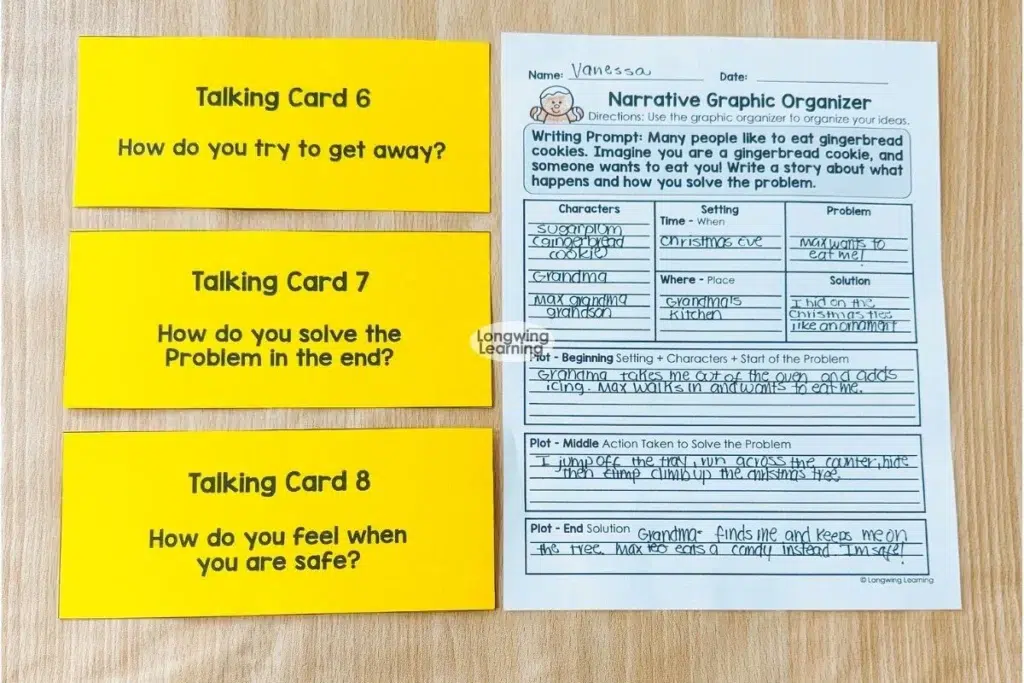
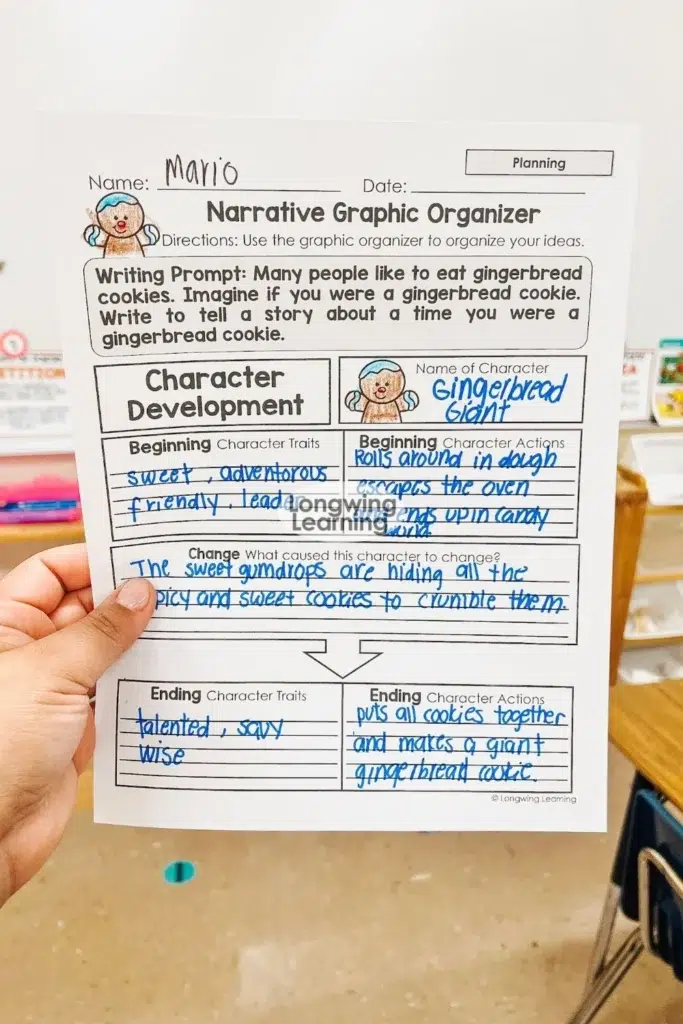
- Plan with a problem and solution organizer. A planning sheet with separate boxes for the problem, the middle, and the solution makes it hard to skip the Try.
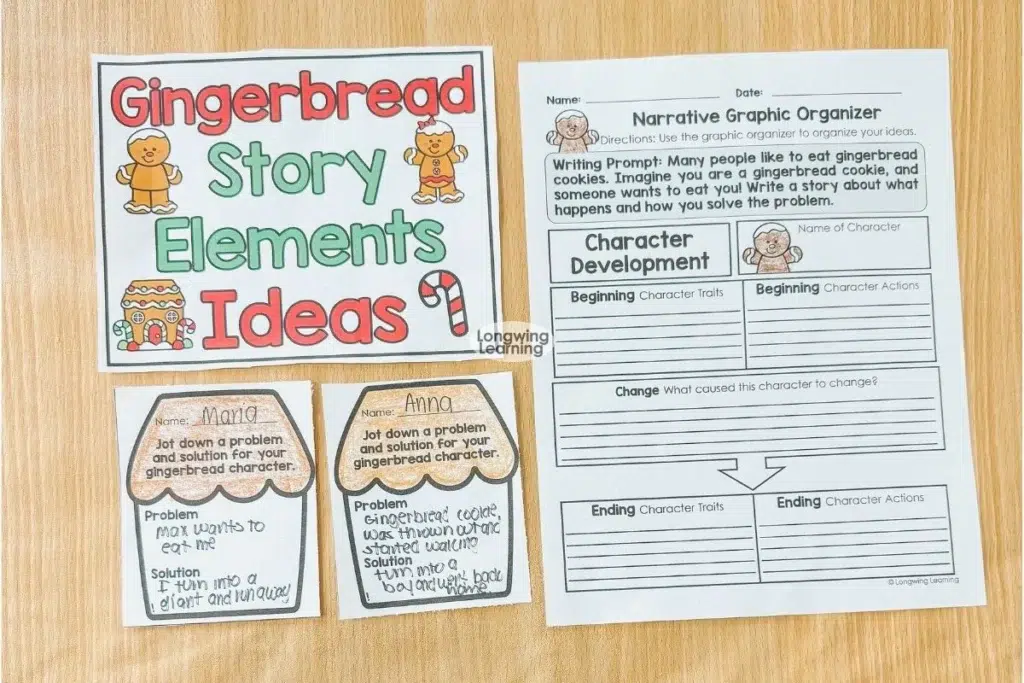
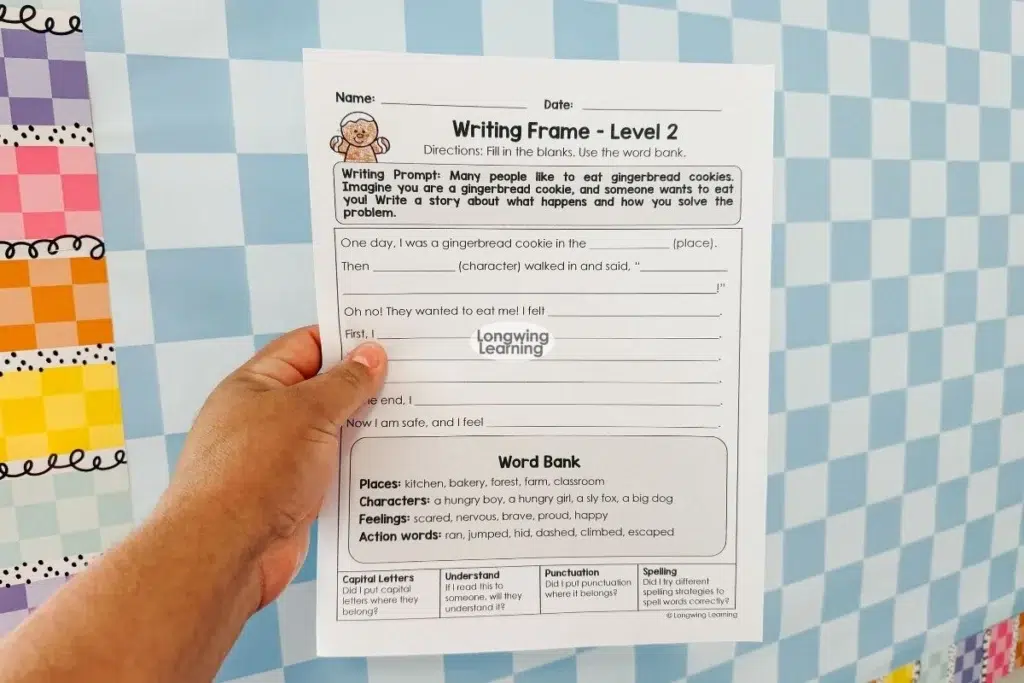
- Use a writing frame. Sentence starters like “Suddenly,” “First,” “Next,” and “In the end,” walk students through the problem and solution one step at a time. For students who need even more help, a fill-in-the-blank frame with a word bank lets them build a full story with the same shape.
The goal is the same for every writer: a character with a problem, at least one try, and a solution that makes sense.
Practice Problem and Solution with Different Writing Prompts
The gingerbread cookie is just the costume.
The lesson works any time you teach narrative writing.
Swap the problem and keep the same steps:
- A pumpkin that doesn’t want to be carved
- A snowman who wakes up and the sun is out
- A lost dog trying to find its way home
Give kids the problem, teach Problem, Try, Solve, and use the three questions to test the solution.
The more often students practice it, the less often you’ll read an “and then” story.
Frequently Asked Questions About Teaching Problem and Solution
What is problem and solution in narrative writing?
The problem is what the main character wants or needs to get away from. The solution is how the character fixes it by the end. Together, they give a story a reason to move from the beginning to the end.
How do you teach problem and solution to 3rd, 4th, and 5th graders?
Start with a mentor text that has a clear problem, like the Gingerbread Man. Then use three simple steps: Problem, Try, Solve. Have students talk through their ideas with a partner before they write.
What are some good story problems for kids?
Keep it simple and easy to picture. Being chased, getting lost, losing something important, or needing to get somewhere on time all work well. A problem kids can imagine is a problem they can solve.
How do I stop my students from writing “and then” stories?
Give them the problem before they start writing, and check that their story has at least one try before the solution. When every event connects to the problem, the “and then” list goes away.
Try This Gingerbread Man Narrative Writing Activity
If you want to try this in December, my Gingerbread Man Writing Prompt has everything ready to go.
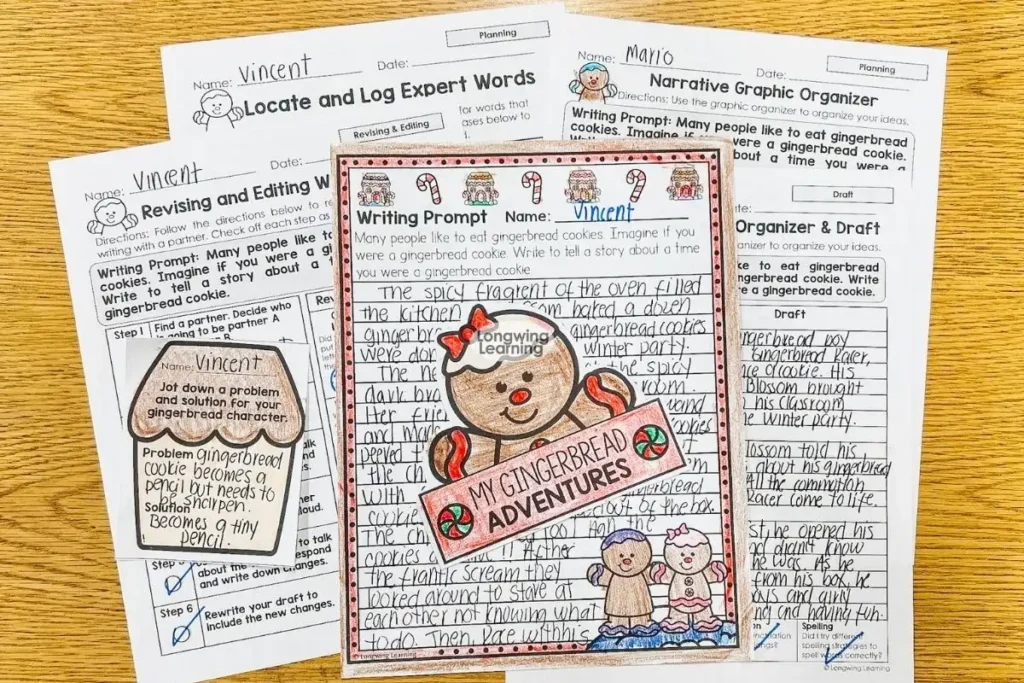
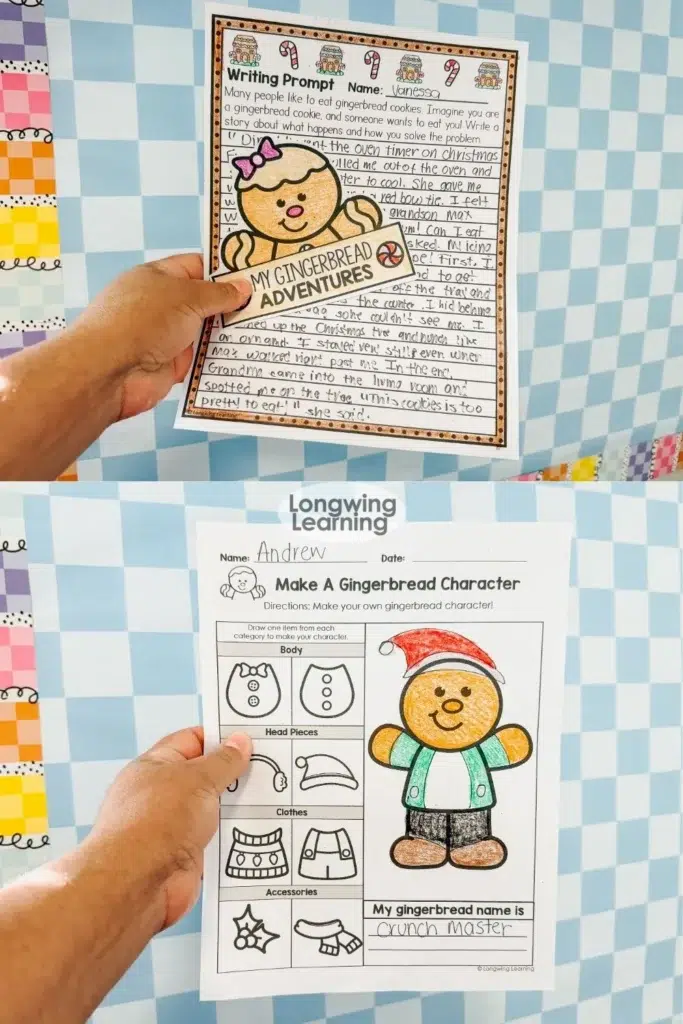
It includes the problem-and-solution prompt, Cards for Conversation, problem and solution cards, five graphic organizers, two leveled writing frames, draft pages, revising checklists, rubrics, completed examples you can project, and a gingerbread topper and quote for your bulletin board.
If You Are Teaching Problem and Solution in Narrative Writing, You Might Also Like
Looking for more ways to teach reading and writing in upper elementary? These posts are a great next step:
- Teaching Plot and Characterization in 5th Grade
- Teaching Students to Analyze a Writing Prompt
- Christmas Writing Prompt for 4th and 5th Grade
- Winter Books for Teaching Descriptive Writing
Save This Narrative Writing Lesson for Later
Don’t lose this lesson when narrative writing comes around again!
Pin this post to your writing board so it’s ready when you need it.
And for more upper elementary reading and writing ideas, come follow me on Pinterest.
I share new lessons, anchor charts, and seasonal writing ideas all year long.