

A family traditions prompt is an easy Thanksgiving writing activity for 4th and 5th grade because every student has something to say.
Students talk about their traditions, plan with a graphic organizer, and write a response they can share or display.
The days leading up to Thanksgiving break can be tricky in an upper elementary classroom.
Students are excited about the break, schedules are different, and keeping everyone focused feels a little harder than usual.
This is one of those times when I like to lean into the season instead of fighting it.
A Thanksgiving writing activity for 4th and 5th grade can still give students real writing practice while letting them think and talk about something that matters to them.
One of my favorite topics for this time of year is family traditions.
Traditions give students something personal to write about, and we still get to work on important skills like organizing ideas, adding details, and elaborating.
Why Family Traditions Make a Great Thanksgiving Writing Topic
When students already have a connection to a writing topic, getting started is so much easier.
Family traditions let students pull from their own experiences.
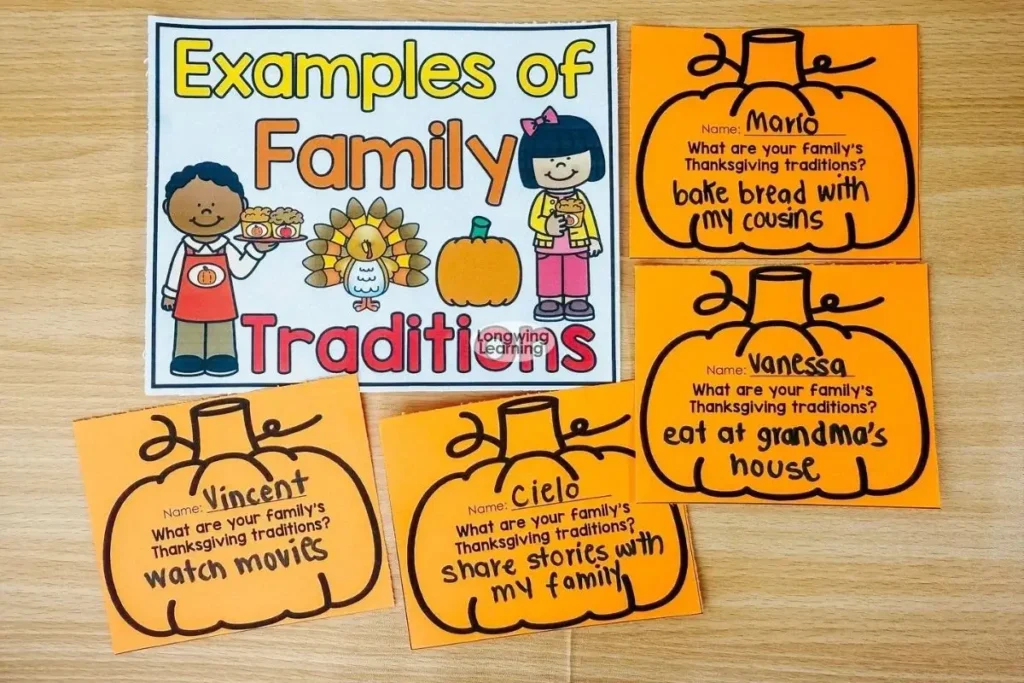
A tradition might be a special meal, a celebration, a place they visit, something they do together, or even a small routine that’s important to their family.
And it doesn’t have to be elaborate. One of my favorite family traditions a student ever shared with me was their family’s movie marathon. I thought that was so clever!
It’s the perfect example to share with your class, because it shows students that a tradition can be simple and still be worth writing about.
It also doesn’t have to be a Thanksgiving tradition. That’s one reason I like using the broader topic of family traditions around this time of year.
Students can write about something important to their own family, even if their family doesn’t celebrate Thanksgiving or doesn’t have a traditional celebration.
You might also have students whose family situation is complicated right now.
Letting students write about a tradition they share with anyone they care about (a grandparent, a family friend, a team) keeps the door open for everyone.
It also creates some great conversations about how different families’ traditions can be.
[IMAGE: Student writing or brainstorming example]
Alt text: Student brainstorming family traditions for a Thanksgiving writing prompt
Start With a Conversation Before Students Write
Before asking students to write, spend a few minutes talking about what a tradition actually is.
Students sometimes hear “family tradition” and immediately think of big holidays. A few examples help broaden their thinking. A tradition could be:
- cooking a certain meal together
- celebrating a birthday in a special way
- visiting a particular place
- playing a game together
- having a family movie marathon
- attending an annual event
- decorating for a holiday
- having a weekly family routine
- making a special recipe
- celebrating a cultural tradition
Once students realize traditions don’t have to be fancy, they usually have much more to say.
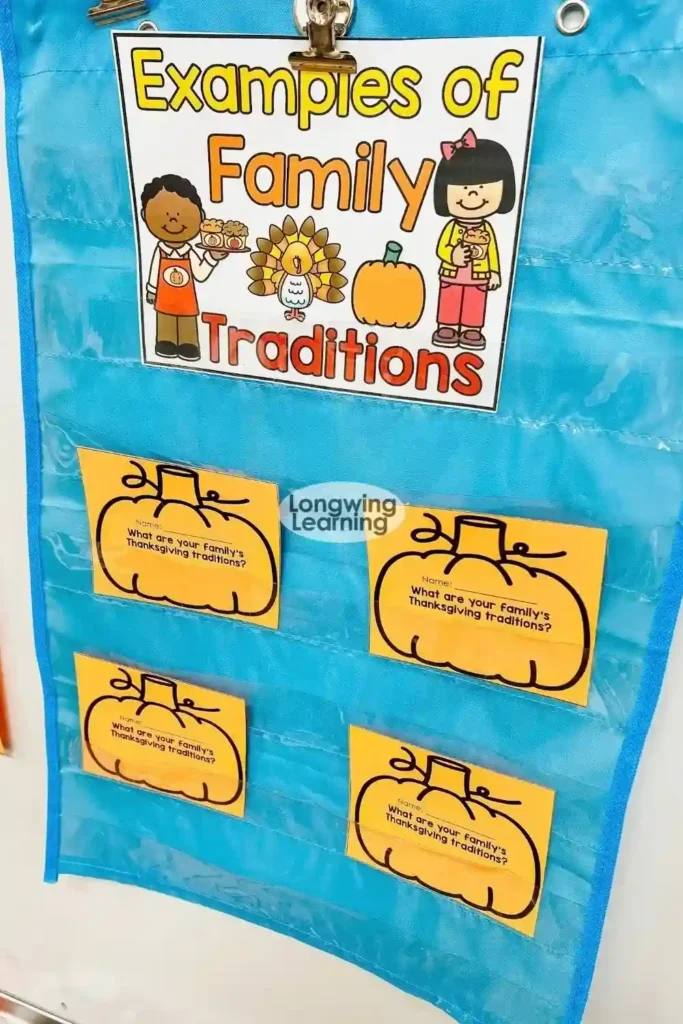
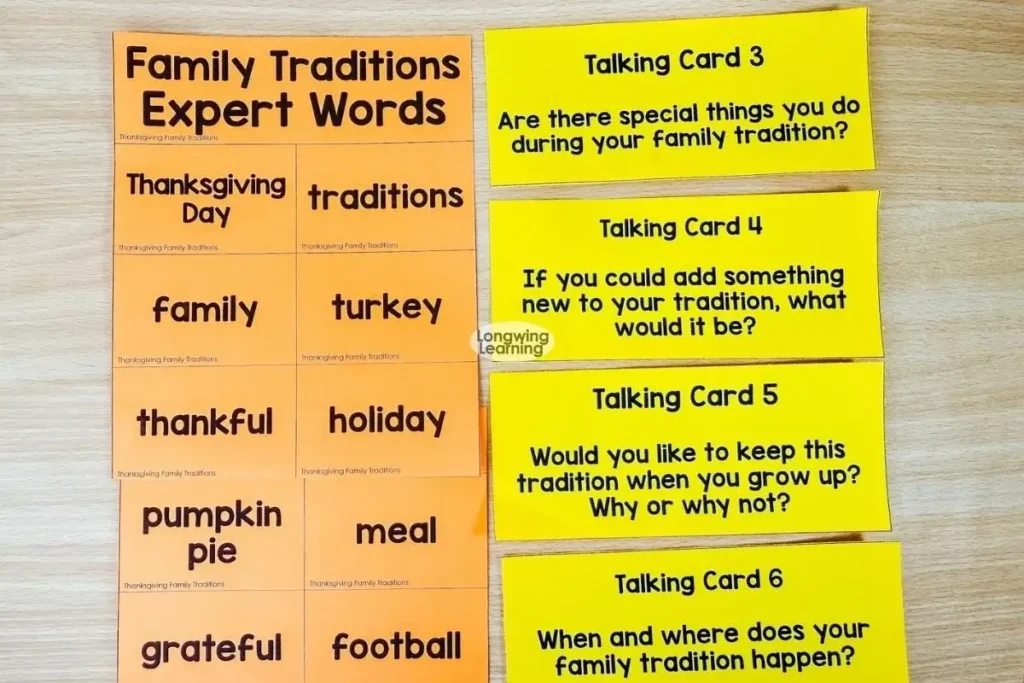
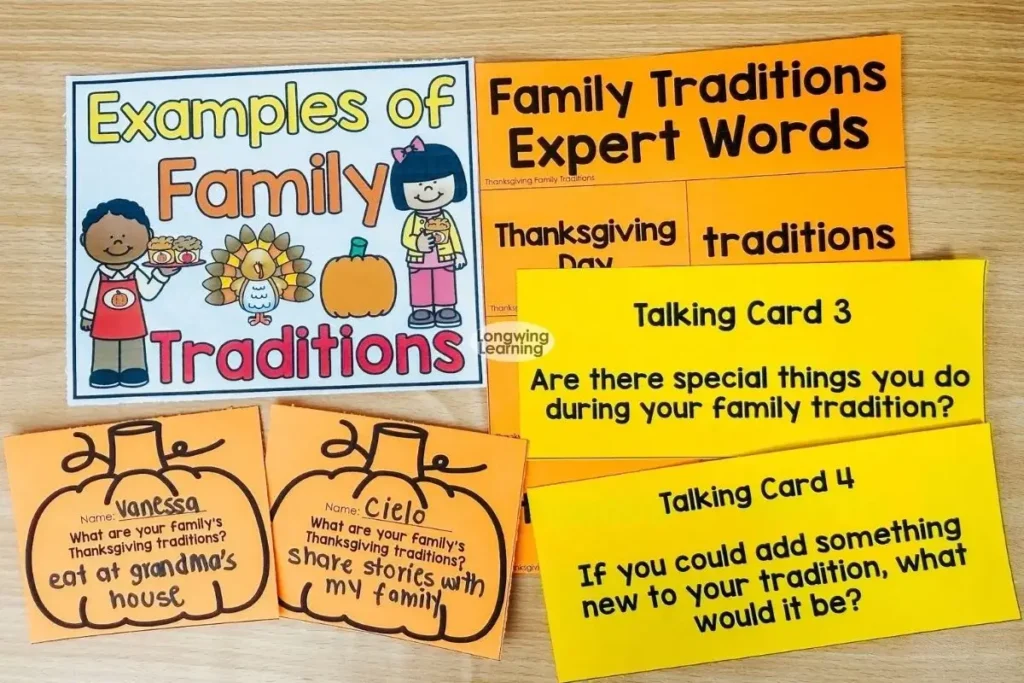
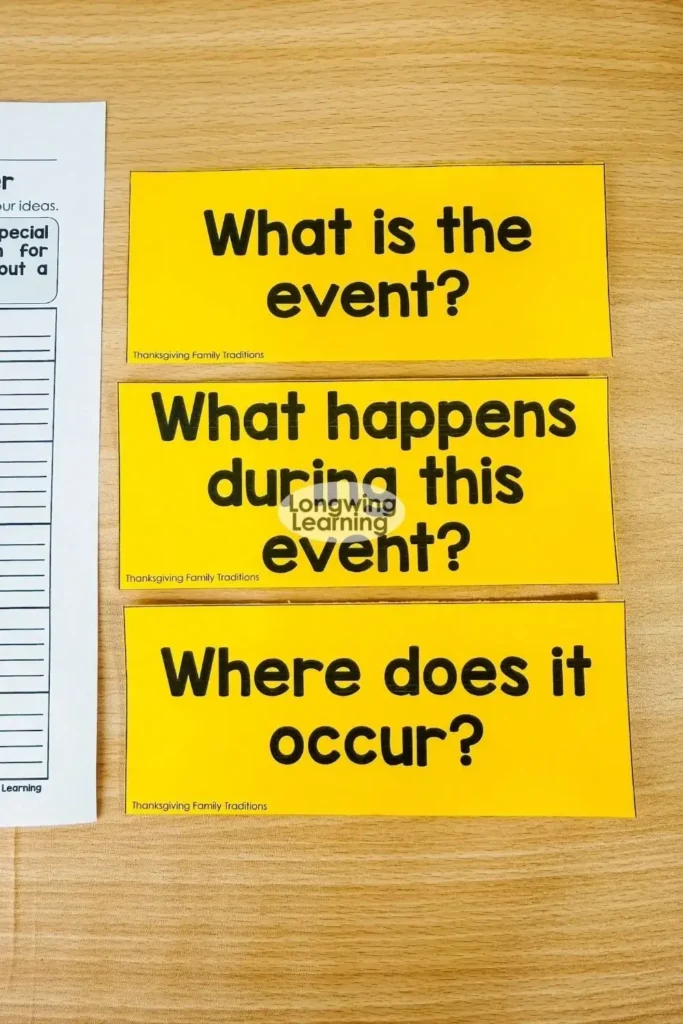
To keep the conversation going, I use discussion cards with questions like:
- Who takes part in your family tradition?
- When and where does your family tradition happen?
- What is a special memory you have from your family tradition?
- If you could add something new to your tradition, what would it be?
These questions are sneaky good writing prep. Every answer is a detail students can use later.
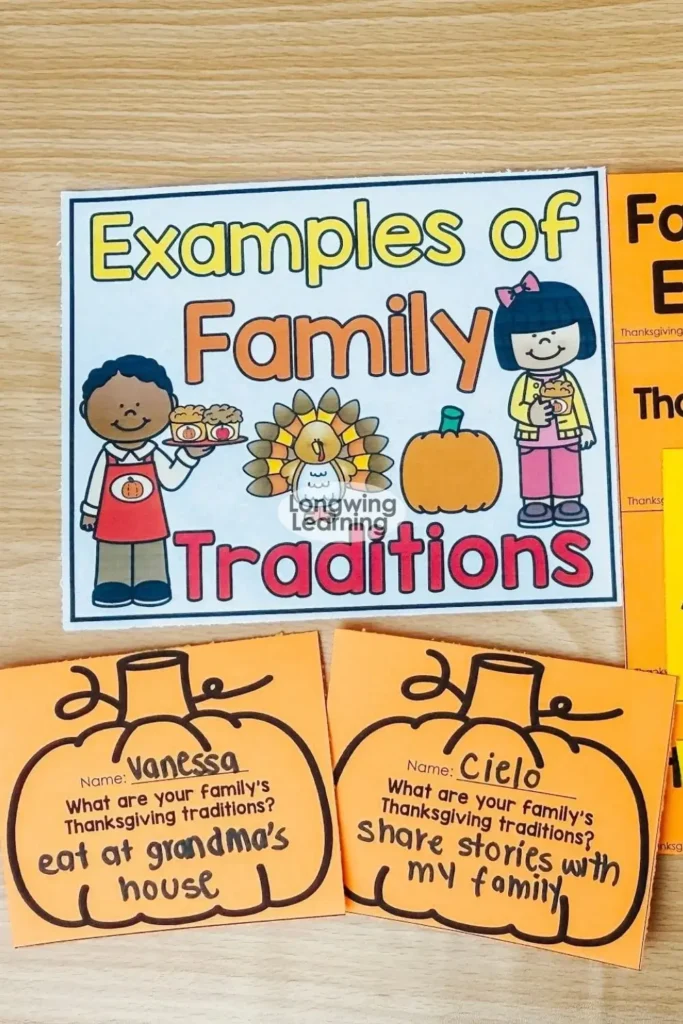
You can also collect ideas on an anchor chart, or start with a read-aloud.
A few picture books that work well with this topic are Fry Bread: A Native American Family Story by Kevin Noble Maillard, The Circle of Thanks by Joseph Bruchac, and The Thanksgiving Door by Debby Atwell.
Plan Before Students Start Drafting
Once students choose a tradition, the next step is getting their ideas organized.
A graphic organizer helps students answer the questions a reader will have: What is the tradition? Who is involved? When and where does it happen? What happens first, next, and last?
That’s also where elaboration comes in. Instead of:
Every year my family makes a big dinner.
Encourage students to tell us more. What do you eat? Who is there? Why is this tradition important to you?
Those questions help students see the difference between stating an idea and developing it for a reader. If you want more ways to teach this, my post on writing strategies for teaching elaboration goes into more detail.
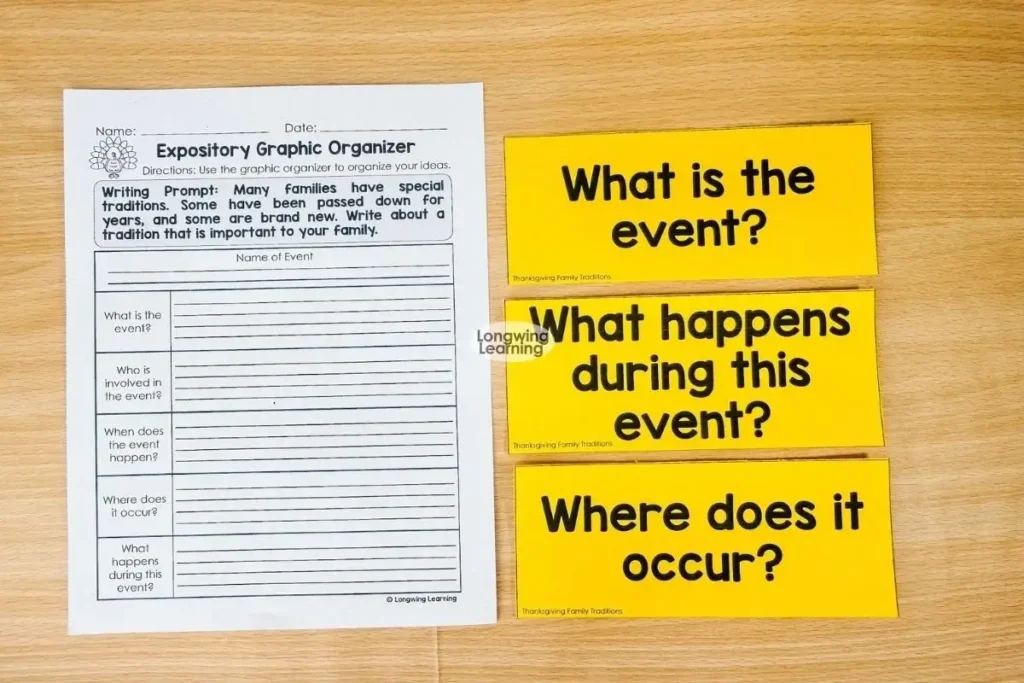
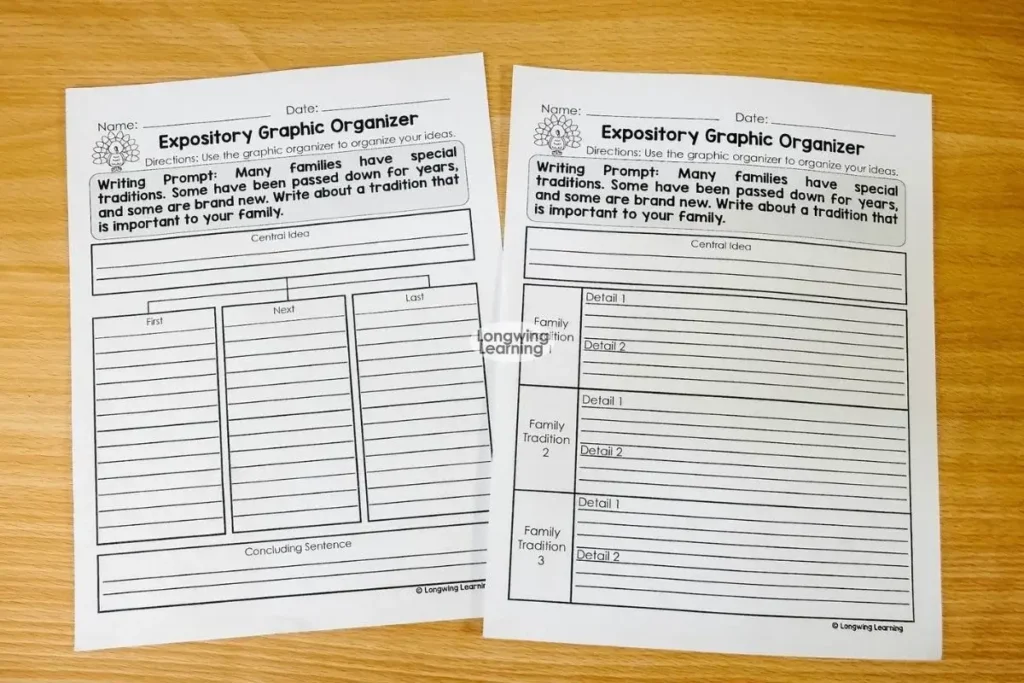
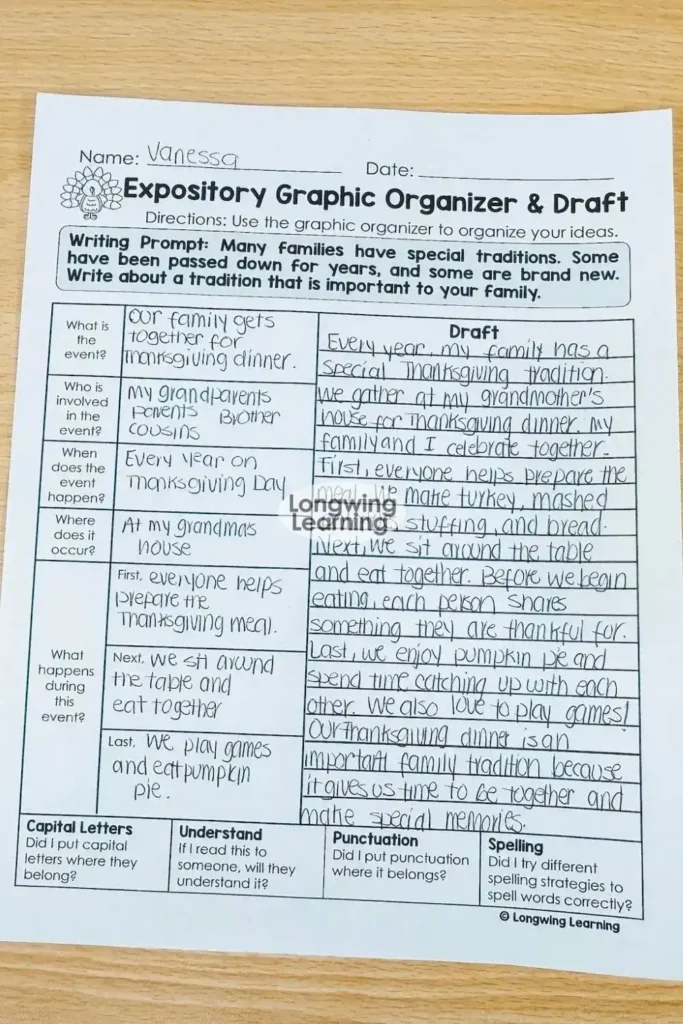
I include four different planning sheets, so you can match the organizer to each student or small group.
Paragraph structure labels are also helpful for students who need extra support seeing how their writing should be organized.
Revise With a Writing Buddy
The week before break is a great time for partner work, and revising is a natural fit.
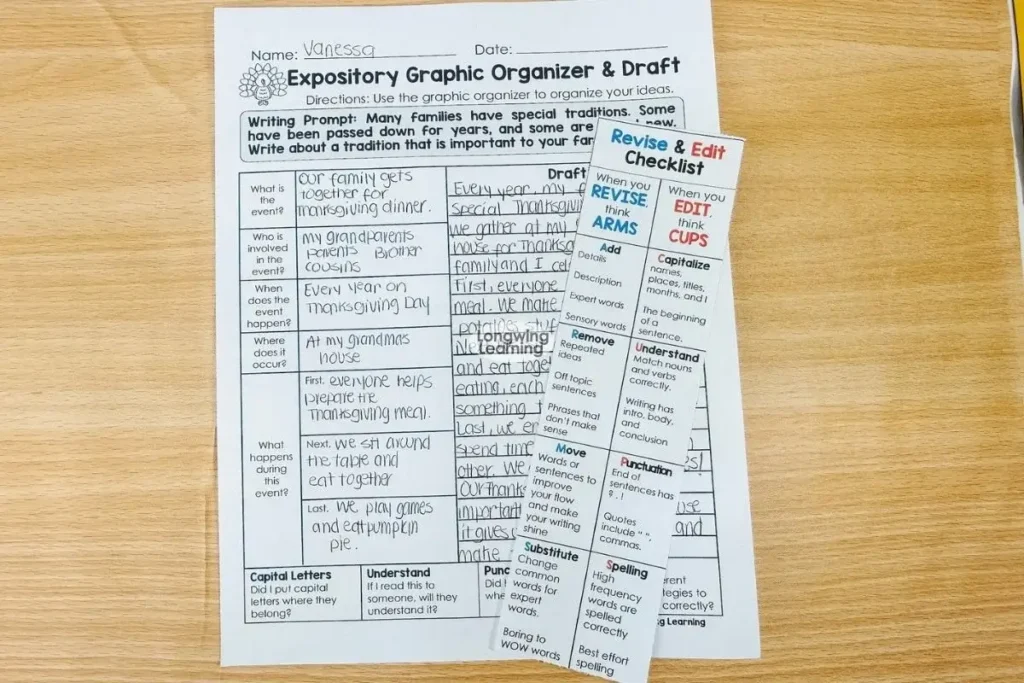
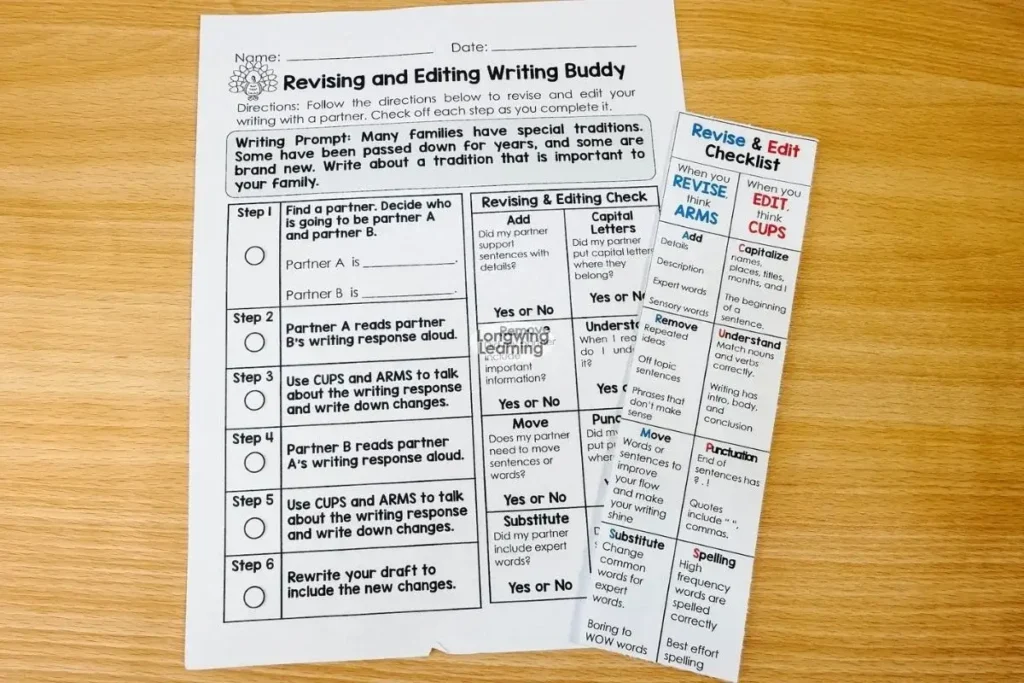
Students trade drafts with a partner, read each other’s writing out loud, and use CUPS (for editing) and ARMS (Add, Remove, Move, Substitute) to talk about what to change.
Then they rewrite their draft with the new changes.
A rubric at the end lets students check their own writing for a clear central idea, transitions, an introduction and conclusion, and elaboration.
This keeps the seasonal topic fun while students practice writing skills they’ll use all year.
Let Students Learn About One Another
One of my favorite parts of a family traditions writing activity is that the finished writing becomes a chance for students to learn about their classmates.
Not every family celebrates the same holidays, eats the same foods, or follows the same traditions. That’s what makes this topic interesting.
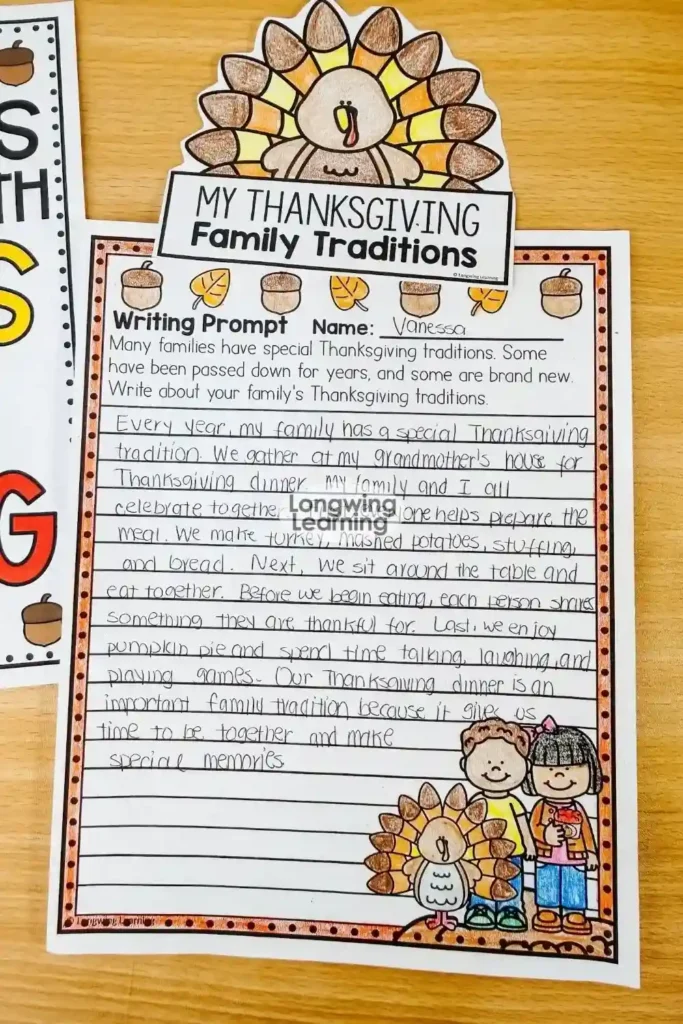
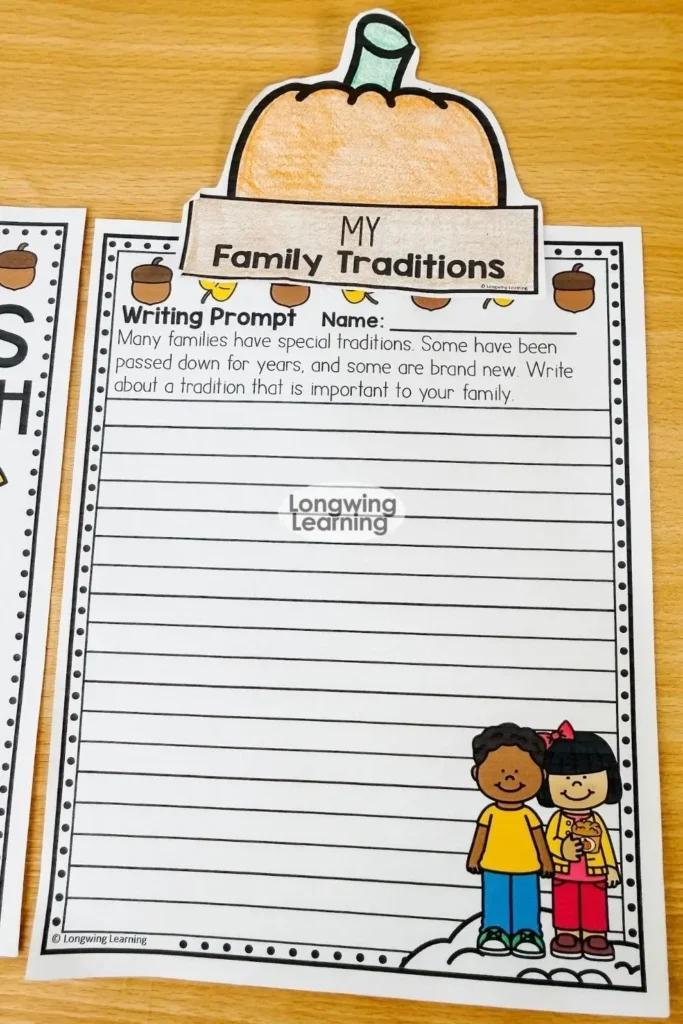
After writing, students can share their traditions with a partner, a small group, or the whole class.
Have students listen for one thing they have in common with a classmate and one thing that’s different.
Now the activity isn’t only about finishing a writing page.
Students are using writing to share something about their lives and learn something about the people around them.
One teacher shared in her review that it was a great way to start talking about family and holiday traditions around the world.
Turn the Writing Into an Easy Thanksgiving Bulletin Board
The finished writing also makes a simple seasonal display.
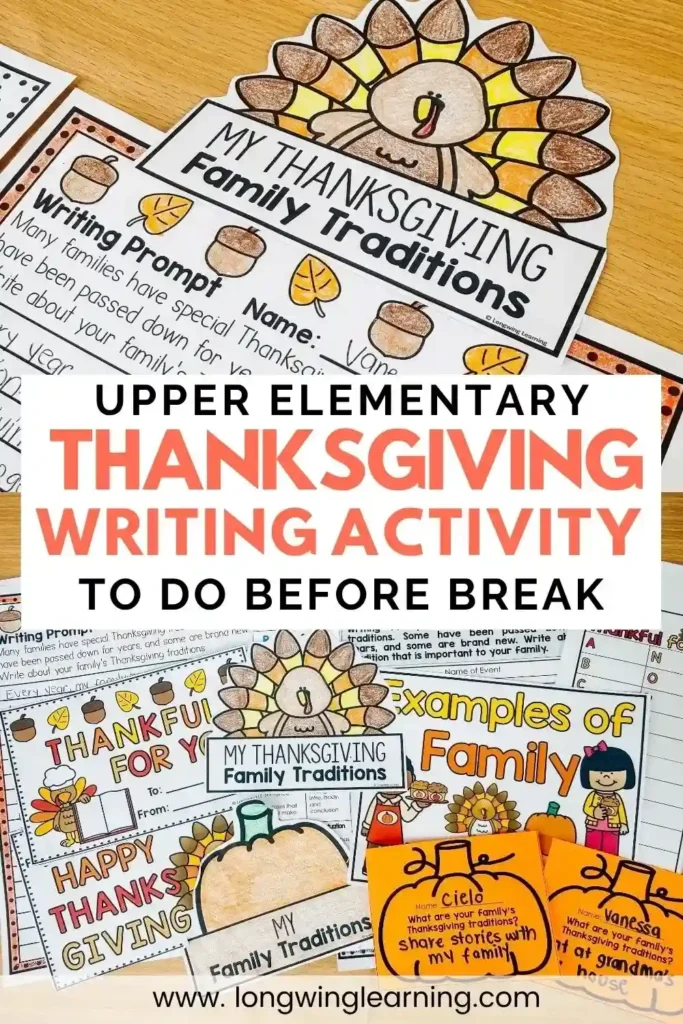
Students color a turkey or a pumpkin topper and glue it to the top of their writing page, which makes each piece stand out (and a little taller on the wall).
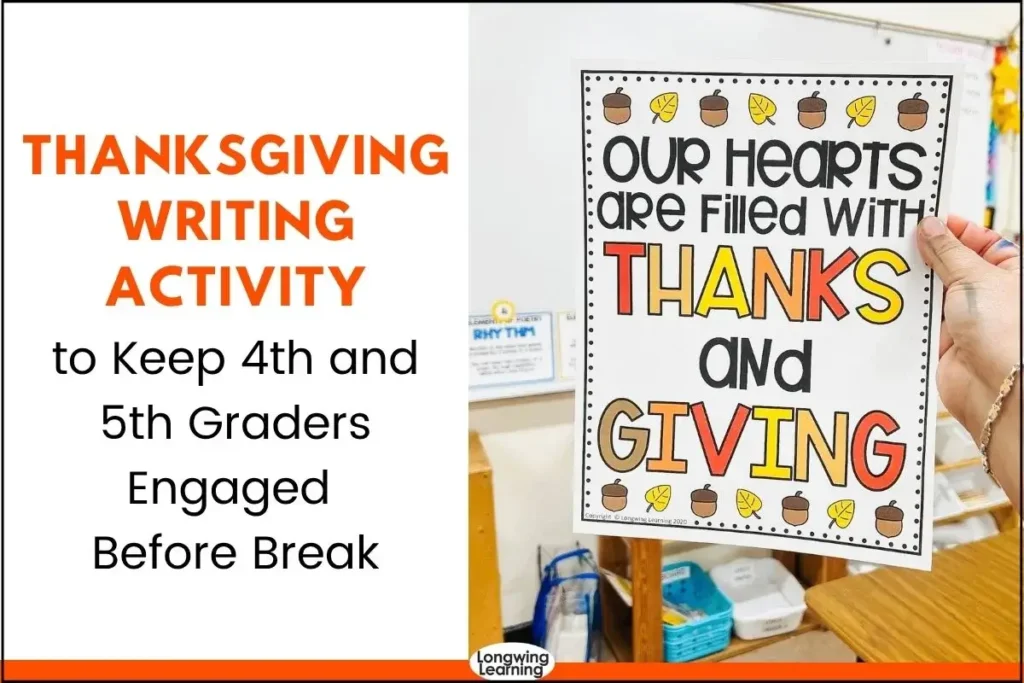
Add the “Our hearts are filled with thanks and giving” quote in color or black and white, and your bulletin board is done.
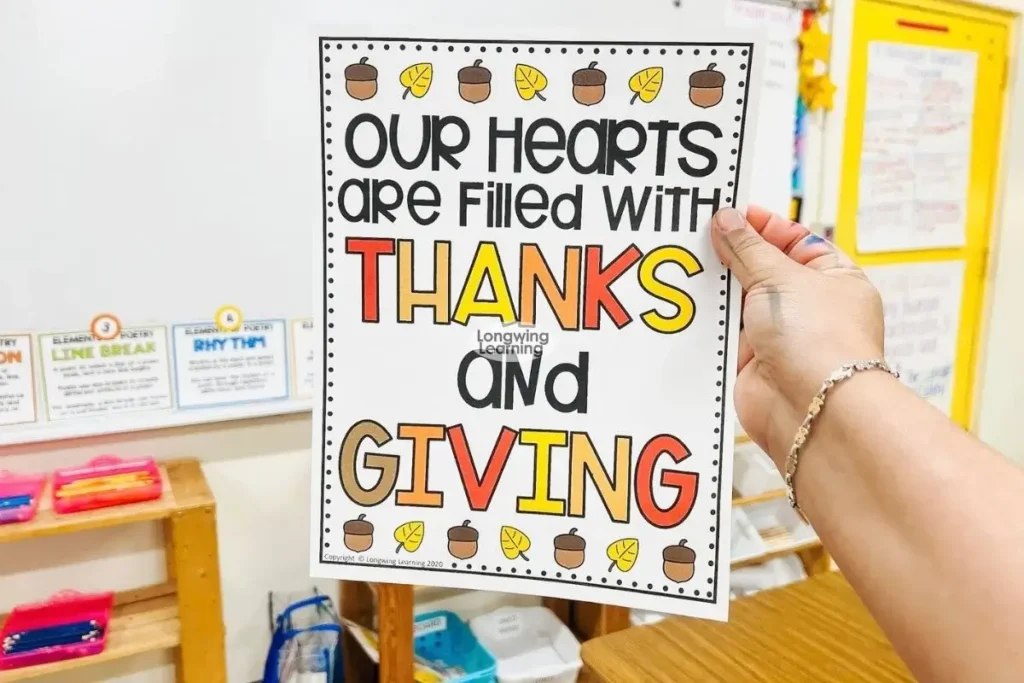
I love when something we’re already doing during instruction can double as classroom decor.
There’s no separate craft to squeeze into the week and no extra project to finish before break.
One teacher mentioned in her review that her students’ finished pieces looked great.
That’s a win during an already busy week.
A Thanksgiving Writing Activity for 4th and 5th Grade
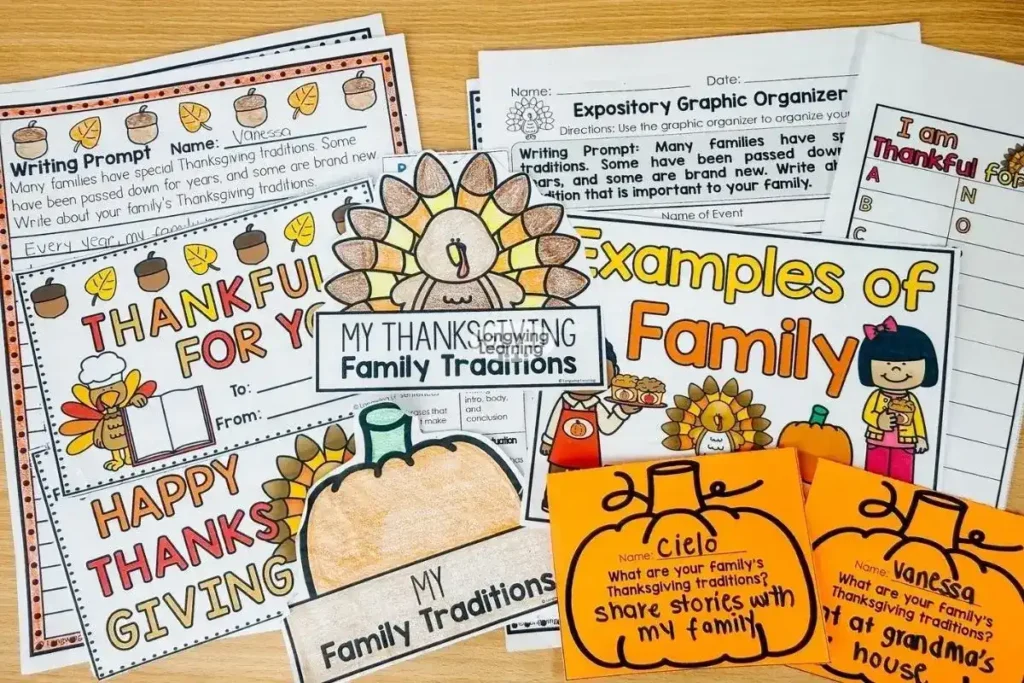
If you’d like to try this with your students, my Thanksgiving family traditions writing activity has everything you need, and you can use as much or as little as you want.
There are three ways to use it:
- Just the prompt. Print the writing page and go. There are three line options, plus extra pages for students who need more space.
- A bulletin board. Add the turkey or pumpkin topper and the quote for an easy display.
- A full writing lesson. Use the discussion cards, anchor chart pieces, vocabulary cards, planning sheets, CUPS and ARMS revising pages, and rubric. Plan on about 90 minutes, or spread it out over a few days.
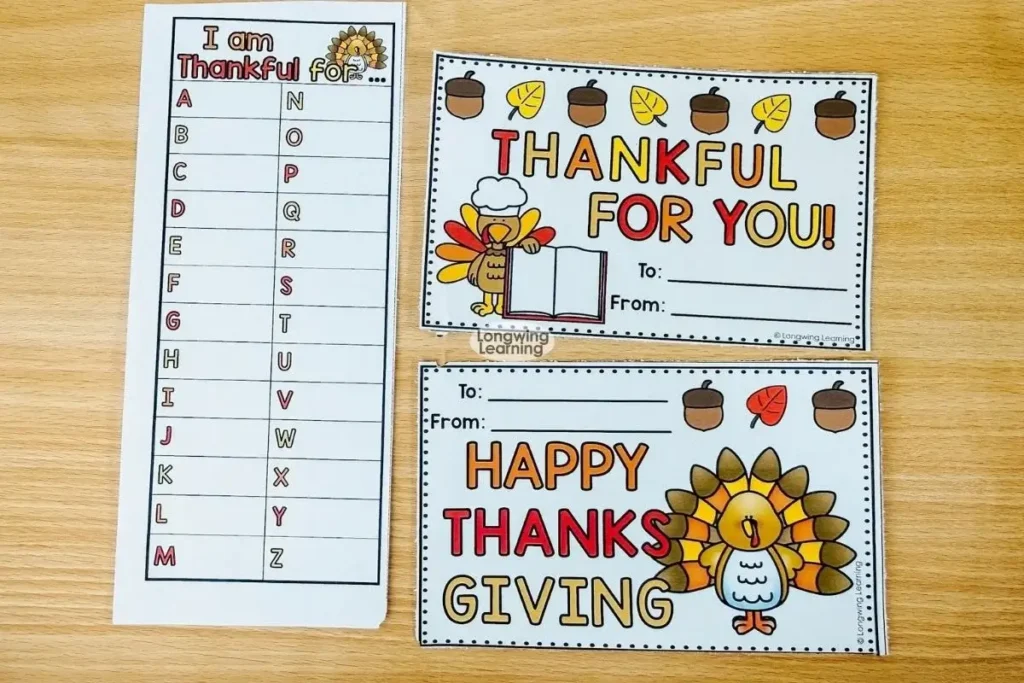
For early finishers, there are Thanksgiving postcards students can color and give to someone they’re thankful for, plus an “I am thankful for” A to Z page.
Teachers have shared that they use it in writing centers, and that it gives their struggling writers the structure they need to be successful.
It’s written for 4th and 5th grade, and it works well in 3rd grade too.
If you want more seasonal writing for the fall, this activity is also part of my fall writing prompts bundle.
[BUTTON: See the Thanksgiving Family Traditions Writing Activity]
Frequently Asked Questions About Thanksgiving Writing Activities
What if some of my students don’t celebrate Thanksgiving?
The prompt asks students to write about any tradition that’s important to their family, so everyone has something to write about. Students can choose a Thanksgiving tradition, a cultural celebration, or even a weekly movie night.
How long does this Thanksgiving writing activity take?
The writing prompt on its own fits into one writing block. The full lesson, with discussion, planning, drafting, and revising, takes about 90 minutes, so many teachers spread it over two or three days before break.
What can early finishers do?
Early finishers can color and write a Thanksgiving postcard for someone they’re thankful for, or complete the “I am thankful for” A to Z page.
Keep Writing on Track Before Thanksgiving Break
The week before a school break doesn’t have to mean putting writing instruction on hold. Sometimes changing the topic is enough.
Students can talk about their families, share their traditions, and enjoy a seasonal activity while still practicing how to organize, develop, and elaborate on their ideas.
Planning the rest of November? My Veterans Day activities post has more ideas for this month. [ADD LINK: fall writing prompts post, once it’s live] And if you want to keep building paragraph skills after break, my five day paragraph writing lesson plan is a great next step.
Save this post to Pinterest so it’s ready when Thanksgiving planning comes around.